


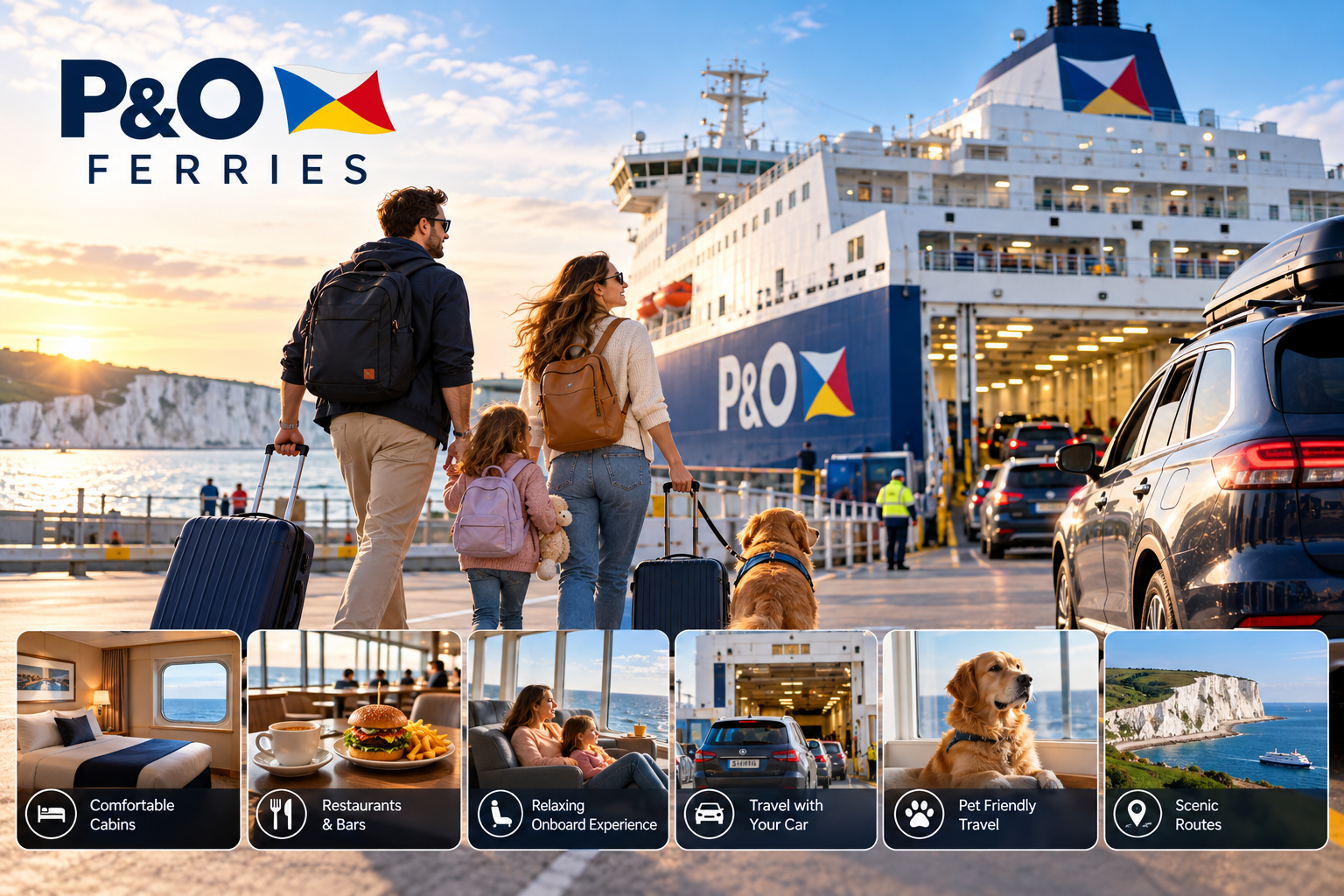
Taking a ferry can make the journey itself part of the trip. Instead of heading straight from one airport to another, you can bring your car, take more luggage, travel with your pet on eligible routes and spend the crossing enjoying the onboard facilities. P&O Ferries operates ferry services connecting the UK with destinations including France, the Netherlands and Northern Ireland, giving travellers several options depending on where they’re starting and how they plan to travel.
For a first-time ferry passenger, though, the process can feel a little different from flying. Check-in deadlines, vehicle boarding, passports, luggage, cabins and pet requirements all need to be considered before you arrive at the port. Here’s a practical guide to what you should know when planning a journey with P&O Ferries.
Which Routes Does P&O Ferries Operate?
P&O Ferries currently operates three main passenger routes: Dover–Calais, Hull–Rotterdam and Cairnryan–Larne. The routes are quite different in terms of journey length and onboard experience, so the best option depends largely on where you’re travelling from and where you’re heading.
The Dover–Calais crossing is the short Channel option, with a sailing time of around 90 minutes. It can be useful for travellers heading into France by car, as well as foot passengers travelling between the UK and mainland Europe. P&O Ferries currently lists multiple daily crossings on this route.
Hull–Rotterdam is a completely different experience because it is an overnight crossing of around 12 hours. The route is particularly useful for road trips through the Netherlands and wider Europe, and passengers can book cabins or other sleeping options for the journey.
The Cairnryan–Larne route connects Scotland and Northern Ireland and takes around two hours. It is designed for both vehicle and foot passengers and can be useful for short breaks as well as longer trips around Northern Ireland.
How Early Should You Arrive for a P&O Ferries Sailing?
Check-in is one of the most important things to understand before travelling with P&O Ferries. Deadlines vary depending on the route and whether you’re travelling with a vehicle, as a foot passenger or with a pet, so it’s important to check the requirements for your specific sailing rather than relying on a general ferry check-in time.
For Dover–Calais, P&O’s travel information currently states that vehicle check-in closes 60 minutes before departure, while foot passengers and passengers travelling with pets have a 90-minute deadline. The route page also highlights the need to allow additional time for border and security procedures.
Hull–Rotterdam passengers should plan to arrive at least 90 minutes before departure, while Cairnryan–Larne has shorter published check-in deadlines. Busy periods can take longer because of traffic, security and border processing, so arriving close to the deadline isn’t a particularly comfortable way to start a trip.
A good habit is to check your booking confirmation and the latest P&O travel information before leaving for the port. That gives you the most relevant deadline for your particular journey.
What Is It Like Onboard a P&O Ferry?
The experience onboard P&O Ferries depends heavily on the route. A 90-minute Dover–Calais crossing naturally has a different atmosphere from an overnight sailing between Hull and Rotterdam, but both offer passengers places to eat, relax and spend time during the journey.
On Dover–Calais, passengers can find food and drink options, duty-free shopping, children’s entertainment and lounge facilities. P&O also offers a Pet Lounge on the route, making the crossing more practical for eligible passengers travelling with animals.
Hull–Rotterdam has a much broader range of entertainment because of the overnight journey. P&O currently lists multiple bars, live entertainment, a cinema, arcade facilities, restaurants and other spaces onboard.
Cairnryan–Larne has its own selection of facilities, including a Club Lounge, food options, children’s entertainment and a lounge bar. Facilities can vary by route and sailing, so it’s worth checking what is available before booking if a particular onboard feature is important to you.
Are There Cabins on P&O Ferries?
For overnight journeys, P&O Ferries offers cabins on the Hull–Rotterdam route. Cabin options include Standard, Outside, Premier, Club and other upgraded choices, giving passengers different ways to make the overnight crossing more comfortable.
Cabins can be particularly useful if you’re travelling with children, want privacy or simply prefer to sleep properly instead of spending the night in a public seating area. Some cabin categories include amenities such as an en-suite bathroom, bedding, towels, air conditioning, reading lights and other facilities.
There are also dog-friendly cabins on the Hull–Rotterdam route. P&O currently lists six specially designed dog-friendly cabins per vessel, while kennels are available as another option when cabins aren’t available or aren’t preferred.
If you’re travelling overnight, booking your preferred accommodation early can be sensible, particularly if you’re travelling with a pet or have specific cabin requirements.
Can You Take Your Car on P&O Ferries?
One of the biggest advantages of P&O Ferries is the ability to take your vehicle on eligible routes. This can make a ferry particularly convenient for European road trips because you don’t have to arrange another vehicle after reaching your destination.
When booking, P&O asks passengers to provide accurate vehicle information, including the make, model and size. Roof boxes, bike racks and trailers may also need to be declared, so it’s worth checking the booking requirements before confirming your journey.
Once you’ve checked in, the onboard team directs vehicle passengers to the appropriate vehicle deck. You’ll then leave the vehicle in the designated area and continue to the passenger decks. P&O advises passengers to take valuables with them rather than leaving them inside the vehicle during the crossing.
For a road trip, this setup can make planning considerably easier. You can pack your own equipment, bring more of the things you’ll need at your destination and continue your journey by road as soon as you leave the ferry.
What About Luggage on P&O Ferries?
Luggage rules can feel different from flying because ferry travel often gives you more flexibility. On the Dover–Calais route, P&O states that there is no restriction on the amount of luggage passengers can bring, although foot passengers must keep their belongings with them throughout the journey.
For vehicle passengers, the ability to keep luggage in your car can make packing easier, although you’ll generally leave the vehicle once you’ve parked on the vehicle deck. That’s why it’s worth taking anything you’ll need during the crossing with you to the passenger area.
Think about the journey itself when packing. For a short crossing, you might only need your phone, passport, wallet and anything needed for the children. For an overnight sailing, you may want to take toiletries, medication, chargers, entertainment and anything else you’ll need during the night.
Can You Travel With a Pet?
Pet travel is another area where P&O Ferries can be useful, but the rules depend on the route and type of accommodation. P&O currently allows eligible dogs, cats, ferrets and pet birds to travel when they meet the applicable entry requirements.
For travel from Great Britain to the EU, P&O notes that pets require the appropriate documentation, including an Animal Health Certificate where applicable. Passengers should arrange their pet’s place when booking and allow additional time for pet check-in procedures.
The Hull–Rotterdam route has specific arrangements because pets cannot remain in vehicles during the overnight crossing. Passengers travelling with dogs can choose between designated dog-friendly cabins and onboard kennels, subject to availability.
If you’re travelling with an animal, don’t treat pet requirements as something to sort out at the last minute. Check the current rules for the exact route, make sure the necessary documents are ready and book the appropriate accommodation in advance.
What Can You Eat and Do During the Crossing?
Food, drinks and entertainment are an important part of the P&O Ferries experience, particularly on longer sailings. The available options vary by ship and route, but P&O currently lists restaurants, bars, food counters, duty-free shopping and entertainment across its network.
On Hull–Rotterdam, passengers can choose from restaurants such as The Brasserie and The Kitchen, alongside several bars and entertainment options. The route also features a cinema and arcade, making the overnight journey feel more like a short travel experience rather than simply transportation.
Shorter crossings have fewer hours to fill, but there are still food and drink options, lounges, shopping and entertainment. Families may also find dedicated children’s areas useful, particularly during busy travel periods.
For a more relaxed experience, selected routes also offer Club Lounge access. P&O describes these lounges as providing food and drinks, comfortable seating and charging points, although availability and pricing depend on the route and sailing.
Is Wi-Fi Available on P&O Ferries?
Staying connected during a ferry crossing can be useful, particularly if you’re travelling for work or need to keep in touch with family. P&O Ferries currently provides Wi-Fi across its ships, although the terms and availability of complimentary access can vary by route.
P&O states that one hour of free Wi-Fi is available in public areas on Hull–Rotterdam ships, with additional Wi-Fi packages available. The company also provides access details through the onboard information desk.
It’s still a good idea to download anything important before sailing. Maps, entertainment, travel documents and other essentials should ideally be available offline in case connectivity isn’t as strong as expected.
What Should You Keep Ready Before Travelling?
Before heading to the port with P&O Ferries, make sure you have your booking details, passport and any other documents required for your destination. P&O specifically reminds passengers travelling to the EU that they need a valid passport and should check the latest government travel requirements before departure.
If you’re travelling by car, double-check that the vehicle details on your booking are accurate. If you’re taking a pet, confirm that the pet booking and required documentation are ready. For overnight journeys, have a small bag with everything you’ll need during the crossing rather than relying on access to your vehicle.
It can also help to check the port location before travelling. P&O operates from different terminals depending on the route, and the company provides specific port information for locations such as Dover, Hull, Cairnryan, Calais, Rotterdam and Larne.
How Can You Make a P&O Ferry Journey Smoother?
The simplest way to make a P&O Ferries journey easier is to plan around the details that are different from flying. Give yourself enough time at the port, keep your passport and essential items accessible, check the rules for your vehicle or pet and understand what facilities are available on your particular sailing.
If you’re travelling overnight, consider whether a cabin is worth adding for your trip. If you’re travelling with children, check the onboard entertainment options. And if you’re taking a car, make sure everything about the vehicle has been declared correctly before arriving at the port.
It is also worth checking your sailing information shortly before departure rather than relying entirely on information you looked at weeks earlier. Ferry schedules, port procedures and available onboard services can change, particularly during busy travel periods.
Is P&O Ferries a Good Option for Your Next Trip?
P&O Ferries offers several different ways to travel between the UK and nearby European destinations, with the right route depending on your starting point and travel plans. Dover–Calais works for short Channel crossings, Hull–Rotterdam provides an overnight route into the Netherlands and Cairnryan–Larne connects Scotland with Northern Ireland.
The ability to take a car, travel with eligible pets and use onboard facilities makes ferry travel different from flying. Longer journeys can include cabins, restaurants and entertainment, while shorter crossings focus more on convenience and getting passengers to their destination efficiently.
The most useful approach is to plan around your own trip rather than choosing based solely on the route. Check the check-in deadline, understand what you’ll need onboard, confirm the latest travel documentation and look at the available extras before you leave. With those details sorted, the ferry crossing can become a straightforward part of the holiday rather than something you have to figure out at the port.