


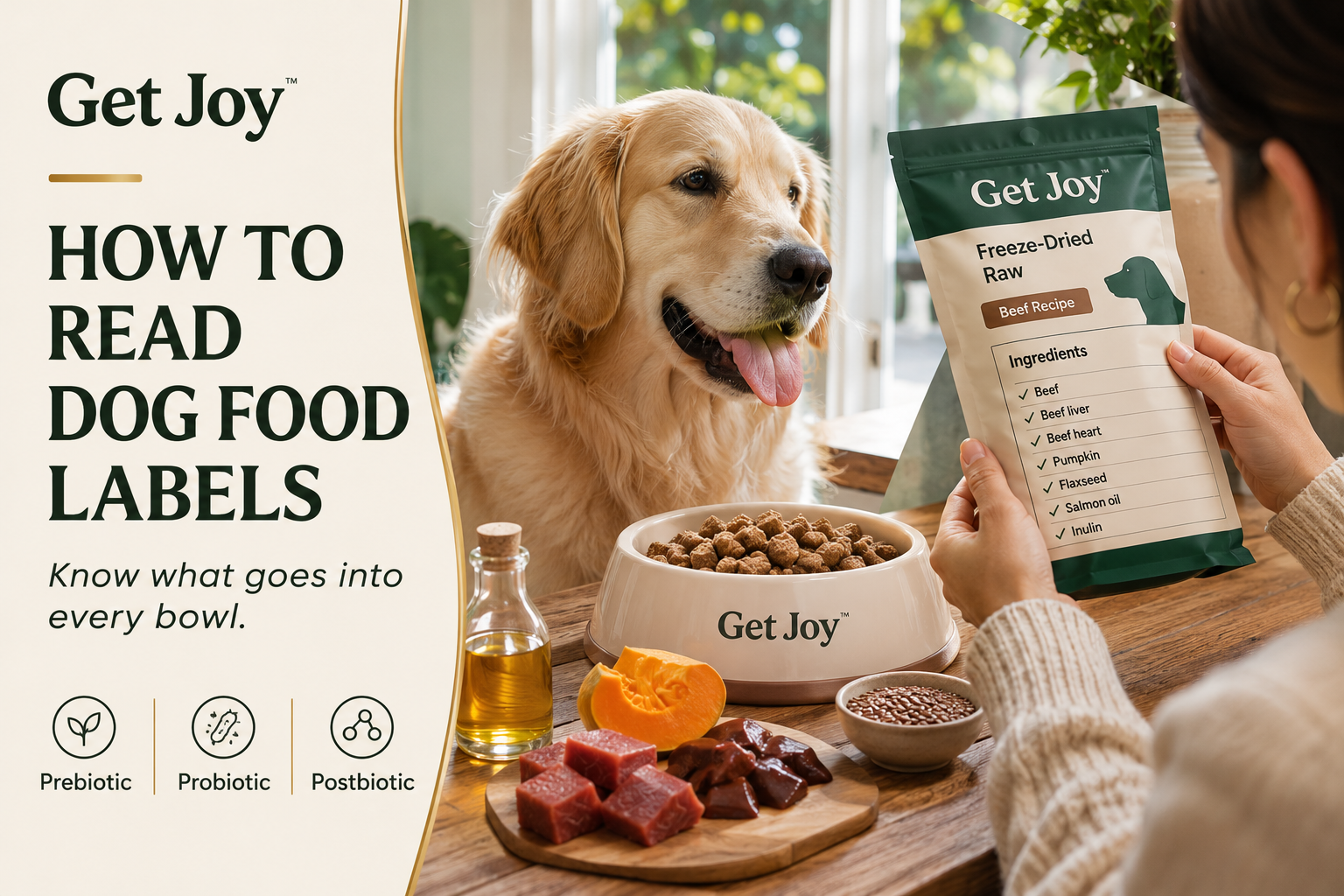
Choosing dog food can feel confusing when every product highlights different ingredients, nutritional benefits and feeding claims. A long ingredient list does not automatically mean a better meal, and attractive packaging cannot tell you everything about nutritional quality. Understanding what each ingredient contributes can help you make more informed decisions. Get Joy focuses on whole-food ingredients and gut-supportive nutrition, making its recipes a useful example when exploring what goes into a dog’s bowl.
Look Beyond the First Ingredient
The first ingredient on a dog-food label is worth checking because ingredients are generally listed in descending order by weight before processing. A clearly identified animal protein, such as beef or chicken, can provide essential amino acids that support muscle maintenance and everyday body functions. Still, looking at just the first ingredient does not reveal the complete nutritional picture. Get Joy uses USDA-sourced beef or chicken as the first ingredient in its freeze-dried raw meals, giving owners a clearly identified primary protein source to examine.
Understand the Difference Between Muscle Meat and Organ Meat
Muscle meat and organ meats contribute different nutrients to a dog’s diet. Muscle meat supplies protein and amino acids, while organs such as liver, heart and kidney contain naturally occurring vitamins, minerals and other nutrients. Their nutritional value depends on the overall recipe and the quantities used, so they should be considered as parts of a balanced formulation. Get Joy includes organ ingredients such as liver, heart and kidney in its freeze-dried raw recipes, alongside animal protein and other whole-food components.
Why Vegetables and Fibre Deserve Attention
Vegetables do more than add variety to an ingredient list. Depending on the food and its formulation, ingredients such as carrots, broccoli, pumpkin and spinach can contribute dietary fibre, vitamins and other naturally occurring nutrients. Fibre is particularly relevant to digestive health because different types can influence stool quality and the activity of beneficial gut bacteria. Get Joy uses vegetables and fibre-containing ingredients in its recipes, including carrots, broccoli, pumpkin and other plant-based components depending on the meal.
Recognise the Role of Healthy Fats
Fats are an important part of a dog’s diet because they provide concentrated energy and help the body absorb fat-soluble vitamins. Certain fatty acids, including omega-3s, also contribute to normal skin, coat and other body functions. When comparing foods, look for clearly identified fat sources rather than judging a recipe by its protein content alone. Get Joy includes salmon oil and flaxseed in its recipes, ingredients that provide sources of omega-3 fatty acids.
What Are Prebiotics, Probiotics and Postbiotics?
These three terms often appear on products designed to support digestive health, but they describe different things. Prebiotics are substances that beneficial gut microorganisms can use as food, probiotics are live microorganisms, and postbiotics are preparations of inanimate microorganisms or their components that provide health benefits. Their roles are different, which is why understanding the full formulation matters. Get Joy combines all three in its Belly Biotics™ blend, using inulin, five probiotic strains and yeast culture in its freeze-dried raw meals.
Why Inulin Appears in Some Dog Food Recipes
Inulin is a type of dietary fibre found naturally in certain plants. It is commonly used as a prebiotic because it can provide nourishment for selected beneficial microorganisms in the digestive system. Its inclusion can be useful when evaluating a food designed with digestive support in mind, although the complete recipe and the dog’s individual tolerance remain important. Get Joy includes inulin in its Belly Biotics™ formulation, making it one of the functional ingredients owners can identify when reviewing its freeze-dried raw food labels.
Check Whether the Food Is Complete and Balanced
A product containing quality ingredients is not necessarily suitable as a dog’s only food. Complete and balanced nutrition means the formulation supplies the required nutrients in appropriate proportions for its stated life stage. This distinction is important when comparing full meals with treats, toppers and supplements, which may serve different purposes. Get Joy states that its meals are formulated by ACVN Board-Certified Veterinary Nutritionists® to meet or exceed AAFCO All Life Stages nutritional standards.
Understand What Freeze-Dried Raw Means
Freeze-dried raw food uses a preservation process that removes moisture from raw ingredients at low temperatures. This creates a shelf-stable format that can be easier to store than conventional frozen raw food. It is still important to follow the manufacturer’s handling instructions and remember that raw products require appropriate hygiene when preparing and serving them. Get Joy offers freeze-dried raw beef and chicken meals, which can be served dry or rehydrated according to the feeding instructions.
Compare Freeze-Dried Raw with Gently Cooked Fresh Food
The processing method is another useful detail to consider when comparing dog food. Freeze-dried raw meals are preserved by removing moisture, whereas gently cooked meals are prepared using heat and generally require frozen storage. Neither format should be selected based on marketing terminology alone. Owners should compare the nutritional formulation, ingredients, feeding instructions and storage requirements before making a decision. Get Joy offers both freeze-dried raw and gently cooked fresh meals, with fresh recipes available in chicken, beef, turkey and lamb.
Be Careful with Artificial Preservatives and Additives
Preservatives help maintain food quality and shelf life, but not every product uses the same preservation method. Some foods rely on artificial preservatives, while others use freezing, dehydration or naturally derived preservation ingredients. It is useful to read the product information rather than assume that every packaged food contains the same additives. Get Joy states that it does not use artificial preservatives in its products, relying on freeze-drying for its raw meals and freezing for its gently cooked fresh meals.
Know When a Supplement Is Different from a Meal
Supplements are designed to provide targeted nutritional support rather than replace a complete daily diet. For example, joint-support products may contain ingredients such as glucosamine, while digestive formulas may include probiotics or other functional components. Before adding a supplement, consider your dog’s existing food, health needs and any medication they take. Get Joy offers functional chews for digestion, calming support and mobility, allowing owners to explore additional options alongside a balanced meal.
Treats Should Also Be Part of the Nutrition Conversation
Treats are often given during training, playtime or everyday interaction, but their nutritional contribution should not be overlooked. Single-ingredient treats can make it easier to identify what a dog is eating, particularly when owners want to avoid unnecessary ingredient complexity. Even so, treats should remain a controlled part of the overall diet and should not displace balanced meals. Get Joy offers single-ingredient beef organ treats, including liver, heart and kidney, as options for dog owners looking for simple treat ingredients.
Consider Your Dog’s Individual Sensitivities
An ingredient that works well for one dog may not suit another. Food sensitivities, allergies, digestive conditions and individual preferences can all influence which recipe is appropriate. If your dog repeatedly experiences itching, vomiting, diarrhoea or other concerning symptoms, consult a veterinarian rather than experimenting with multiple foods without guidance. Get Joy offers several protein options across its meal range, including beef, chicken, turkey and lamb, giving owners different recipes to discuss with their veterinarian when choosing an appropriate diet.
Make Ingredient Reading a Regular Habit
Reading labels should not be a one-time activity when selecting a new food. Manufacturers can update recipes, ingredients and product information, so checking the latest packaging and official product details is a sensible habit. Pay attention to the ingredient list, nutritional adequacy statement, feeding directions, storage instructions and any warnings relevant to your dog’s needs. Get Joy provides ingredient information and product details that owners can review when comparing its meals, treats and functional supplements.
Wrapping Up
Understanding a dog-food label makes it easier to look beyond attractive packaging and focus on what actually matters: identifiable ingredients, appropriate nutrient balance, suitable processing and a formulation that matches the dog’s individual needs. No single ingredient guarantees better health, and the complete diet is always more important than one highlighted component. By examining its recipes and nutritional approach, Get Joy gives dog owners another range to consider when making informed decisions about everyday nutrition.