


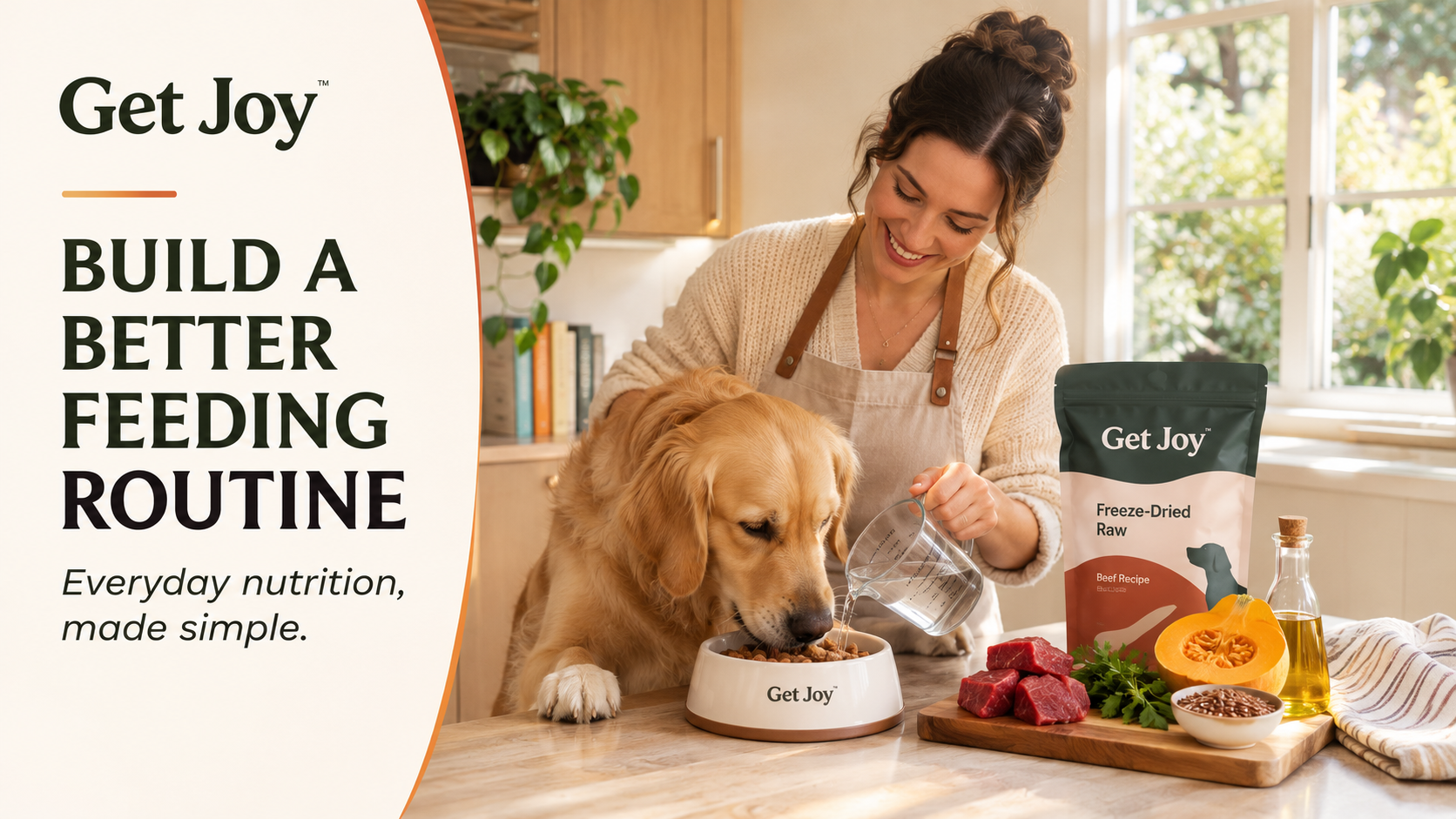
Feeding a dog is about more than filling a bowl twice a day. The ingredients, portion sizes, preparation methods and consistency of meals all play a role in maintaining a healthy routine. Choosing food that fits your dog’s nutritional needs and your daily schedule can make mealtimes easier to manage. Get Joy offers different meal formats and complementary products designed around whole-food nutrition and digestive health.
Start by Understanding Your Dog’s Nutritional Needs
Every dog has different dietary requirements depending on factors such as age, body weight, activity level and individual sensitivities. A growing puppy, an active adult dog and a senior companion may need different feeding portions and nutritional considerations. Before changing food, consider your dog’s current diet and discuss any specific health concerns with a veterinarian. Get Joy provides meal options designed for different preferences and feeding needs, with a feeding quiz that helps owners explore suitable plans.
Why Ingredient Quality Matters
The ingredients in a dog’s food determine the nutrients available in each serving. Many owners prefer recipes that clearly identify their protein sources, vegetables, healthy fats and other components rather than relying on vague ingredient descriptions. Understanding what goes into the bowl also makes it easier to identify ingredients that may not suit a particular dog. Get Joy uses recognisable whole-food ingredients, including beef or chicken, organ meats, vegetables, flaxseed and salmon oil in its freeze-dried raw recipes.
Choosing Between Freeze-Dried Raw and Fresh Meals
Dog food comes in different formats, and the right choice often depends on convenience, storage space and feeding preferences. Freeze-dried food is designed to be stored without refrigeration, while fresh meals require freezer space and preparation before serving. Both formats can offer practical advantages when they fit a dog’s nutritional needs. Get Joy offers freeze-dried raw meals and gently cooked fresh meals, giving owners two different ways to build a consistent feeding routine.
Making Freeze-Dried Food Part of Everyday Meals
Freeze-dried food can be useful for owners who want a convenient meal option without keeping every bag in the refrigerator or freezer. The process removes moisture from ingredients at low temperatures, creating a shelf-stable product that can be measured and served when needed. Some dogs may prefer the texture after moisture has been added. Get Joy offers beef and chicken freeze-dried raw recipes that can be served dry or rehydrated with warm water or bone broth before feeding.
Exploring Fresh Meals for a Different Feeding Experience
Fresh dog food can be an alternative for owners who prefer gently cooked meals made with recognisable ingredients. Unlike shelf-stable options, frozen meals need to be stored in the freezer and thawed before serving. Planning portions ahead of time can help prevent last-minute preparation and make daily feeding more organised. Get Joy offers gently cooked fresh recipes in several protein options, including chicken, beef, turkey and lamb.
Introducing a New Food Gradually
Changing a dog’s food suddenly can sometimes lead to temporary digestive changes. A gradual transition gives the digestive system time to adjust to a different recipe and ingredient combination. A common approach is to introduce a small amount of the new food alongside the existing diet, gradually increasing the new portion over several days. Get Joy recommends a transition period of around seven to ten days and explains that individual dogs may respond differently as their diets change.
Understanding the Role of Gut Health
Digestive health is an important part of a dog’s overall nutritional routine. The gut microbiome contains microorganisms involved in digestion and other biological processes, which is why ingredients that support a balanced gut environment receive attention in modern pet nutrition. Prebiotics, probiotics and postbiotics serve different functions and are increasingly included in specialised food formulations. Get Joy incorporates its Belly Biotics™ blend into freeze-dried raw meals, combining prebiotic fibre, live probiotic strains and postbiotic ingredients.
Using Treats and Supplements Thoughtfully
Treats can make training and everyday interaction more rewarding, while targeted supplements may be useful for dogs with particular nutritional goals. The important thing is to avoid treating these products as replacements for a complete and balanced diet. Owners should also account for treats when considering their dog’s overall daily food intake. Get Joy offers single-ingredient beef organ treats, including liver, heart and kidney, along with functional chews designed for areas such as digestion, calming and mobility.
Getting Portion Sizes Right
Even nutritious food needs to be served in appropriate quantities. Feeding too much or too little can affect a dog’s ability to maintain a healthy body condition, so portions should be based on individual requirements rather than guesswork. Weight, age, activity level and the calorie content of the food are useful considerations when establishing a feeding schedule. Get Joy provides a feeding calculator and personalised plan builder that use details such as a dog’s weight and feeding preferences to help estimate suitable portions.
Storing Dog Food Correctly
Proper storage helps maintain food quality and makes daily feeding more convenient. Dry, freeze-dried products should be kept away from moisture, heat and direct sunlight, with packaging resealed after use. Fresh frozen meals require a different routine because they need to remain frozen until needed and should be refrigerated after thawing. Get Joy recommends storing freeze-dried meals in a cool, dry place and using opened bags within 30 days for best results, while thawed fresh meals should be used within three to four days.
Creating a Feeding Schedule You Can Maintain
A feeding schedule helps owners keep track of portions, meal times and food supplies. It can also make it easier to notice changes in appetite or eating habits. Preparing meals at consistent times and keeping feeding instructions accessible can be especially useful in households where more than one person looks after the dog. Get Joy also offers Auto-Ship, allowing customers to manage delivery frequency, adjust upcoming orders and maintain a more predictable supply of their chosen products.
Making Small Changes for Long-Term Consistency
A successful feeding routine does not need to involve complicated preparation or frequent changes. It is usually more practical to choose an appropriate food, introduce it carefully, measure portions and monitor how the dog responds over time. If persistent digestive problems, appetite changes or other symptoms appear, a veterinarian can help identify the underlying cause. Get Joy brings meals, treats and complementary nutrition products together in one range, giving dog owners options to consider when planning everyday feeding.
Wrapping up
A thoughtful feeding routine starts with understanding a dog’s individual needs and choosing food that works for both the animal and the household. Ingredient quality, suitable portions, gradual transitions and correct storage all contribute to a more organised approach to everyday nutrition. With different meal formats and additional products available, Get Joy gives dog owners several options to explore while building a feeding routine that can be maintained consistently.