


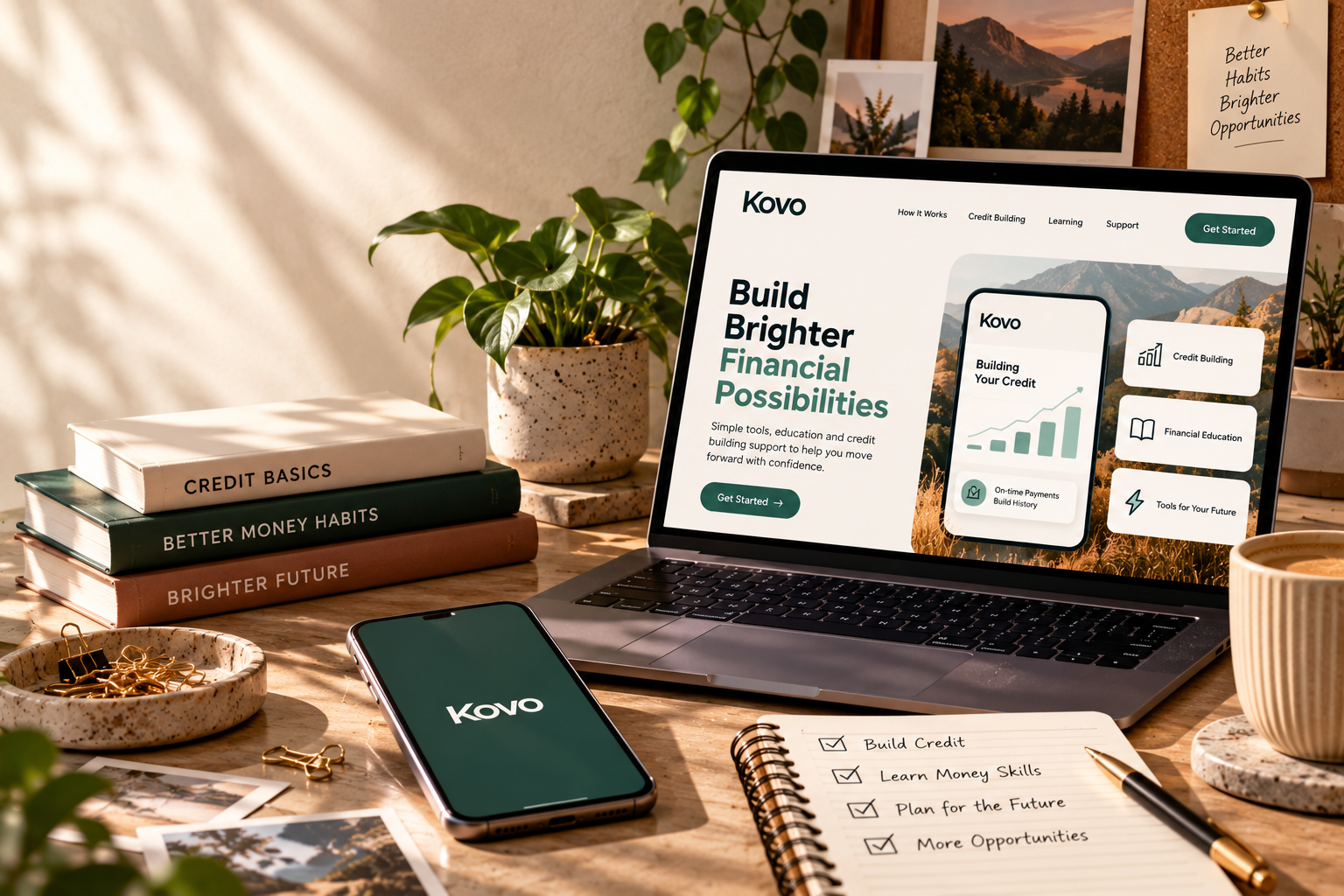
Most reviews of money products are written to sell, and you can usually feel it. Every paragraph glows, every drawback gets one soft sentence, and the button appears again and again. This post tries to do the opposite. We will look at Kovo, a credit-building service, with a cool head and a notebook, and we will end with a way for you to decide, even if the answer turns out to be no. If you are tired of hype and want plain talk about costs, limits and risks, you are in the right place.
The quick verdict, before the details
If you want the short version, here it is. This kind of service can make sense for someone with little or no credit history who wants a simple, automated way to create a record of on-time payments. It makes much less sense for someone who already has strong credit, who needs cash quickly or who cannot guarantee the monthly payment. Treat this as Unit 1 of your decision: know which group you belong to before reading anything else. The rest of this guide tests that quick verdict against the details of Kovo, so you can confirm it or change it.
What you are really paying for
It helps to be clear about the product. It is not a loan that gives you spending money, and it is not a credit card. Reviews describe it as a plan where you pay monthly for tools and services, and those payments are reported as an installment account. In simple words, you are paying for the reporting and the extras that come with it. That is a perfectly fair thing to buy, as long as you see it clearly. When you read the offer from Kovo, ask one question: what exactly do I get for each payment, and would I buy those things if the credit reporting did not exist?
What looks good
Let us start with the positives. Reviewers often mention that there is no hard credit check when you apply, which means applying should not dent your score. The idea of a fixed, predictable payment is easy to budget for. The reporting is designed to create a steady history, and some sources say it reaches all four major bureaus, which is more than some competitors offer. The learning material can be a bonus for people who never had money lessons at home. If these points match your needs, Kovo deserves a closer look. Just remember that a feature on a sales page is a claim, not a result.
What to watch
Now the other side. Credit building through a paid plan costs money, and the cost is certain while the benefit is not. Your score may rise a little, a lot or barely at all, depending on your starting point. If you already hold several healthy accounts, one more may add little. Some reviewers also note that a payment more than thirty days late can be reported, which would hurt you instead of helping. Treat this as Unit 1 of your risk list: the downside of failing at the one thing the plan requires is real. Before choosing Kovo, ask yourself how you would pay in a month when money is short.
The money-back question
Here is a point many people miss. Some credit-builder loans from banks and credit unions hold your payments in a savings account and hand the money back at the end. According to some reviewers, this service is different, and your payments are not returned when the term ends. That does not make it bad. It simply means you should view the monthly amount as the price of a service, not as forced savings. Savings-style products feel kinder, because you finish with money in hand. If getting your payments back matters to you, compare that feature carefully against Kovo, and decide whether the trade is worth it.
Reporting: why it matters and how to check it
Reporting is the heart of any credit builder. If payments are not reported, nothing is built. Ask which bureaus receive your data, how soon after each payment it appears and how the account will be labeled on your report. After a few months, pull your free credit reports and look for the account yourself. Do not assume. If the account is missing or wrong, contact support at once and keep copies of your messages. A service that reports properly should be happy to explain the process. When you evaluate Kovo, treat this verification step as non-negotiable, because it is the only proof that your money is doing its job.
Are the courses worth it?
Courses are often the part people skip. If a plan includes lessons on budgeting, credit basics and debt payoff, the question is simple: will you actually open them? Good lessons can be valuable, especially if no one ever taught you how credit scores work. But free resources also exist, from nonprofit counselors to government websites, so do not pay extra for something you will ignore. A useful trick is to set a small goal, such as finishing one lesson every week for the first month. If you do not follow through, the courses are not adding real value to your decision about Kovo, and you should judge the plan on reporting alone.
How to read reviews without being fooled
Reviews are useful, but they can mislead. Ratings on different sites can vary quite a bit, and a high score in an app store does not always match the experience on independent review pages. Look for patterns, not single stories. If many people mention the same problem, such as confusion about cancellation or slow support, take it seriously. If the praise is vague and repeated, be cautious. Also check the date, because terms change over time. Many reviews, including some of the sources I looked at, quote different prices and features, which suggests the offer has moved. Always trust the current page of Kovo over any secondhand summary.
Doing the real math
Let us use a simple example, only to practice the thinking. Imagine a plan that costs ten dollars a month for twenty four months. That is two hundred and forty dollars in total, even though the monthly number feels small. The right question is whether a stronger credit file could save you more than that, for instance through a lower deposit, a better rental approval or cheaper borrowing later. For some people it will, and for others it will not. These numbers are only an illustration, not the current price, so check the real terms on Kovo and do the same sum with them before you decide.
A simple scorecard you can use
Write five lines on a page and give each a score from one to five. First, need: do I truly lack credit history? Second, affordability: can I pay every month without stress? Third, clarity: do I understand the terms, fees and exit rules? Fourth, alternatives: have I compared at least two other options? Fifth, patience: can I wait a year or more for results? Add the numbers. A high total suggests a good fit, while a low one suggests waiting or choosing another path. Treat this as Unit 1 of your personal checklist, and fill it in honestly while you read about Kovo.
Who should probably skip it
Be bold enough to say no. If your credit is already healthy, you will probably gain little. If you carry high interest debt, paying that down may help your score and your wallet more than a new subscription. If you are behind on bills or your income is unstable, adding a monthly payment can make things worse. If you want fast results, remember that credit changes slowly. And if you cannot read and understand the contract, pause until you can, or ask a trusted adult or a nonprofit counselor. Skipping Kovo for now is not failure, it is good judgment.
Check the alternatives first
Before paying anyone, spend an hour on the alternatives. A secured credit card uses a refundable deposit and reports like a normal card. A credit builder loan from a credit union may return your payments at the end. An authorized user spot on a trusted relative’s well-managed card can add history without a new bill. Rent reporting is available through some services. None of these is perfect, and some have eligibility rules. The point is comparison, and Kovo should earn its place beside them on cost, reporting coverage and flexibility, not win simply because it was the first one you saw.
Build a tiny money system around it
A plan only works when your life supports it. Open a notes page and list your fixed monthly bills, then add the payment date for this plan next to them. Move that date to just after payday if you can. Keep a small buffer in your account, even a modest amount, so a surprise expense does not cause a missed payment. Treat this as Unit 1 of your money system: automate what matters and review it once a month. If you join Kovo, set a reminder two days before each due date and a second one on the day itself. Calm routines beat good intentions every time.
Plan your exit before you enter
Smart people read the exit door first. Find out how to cancel, whether there is any penalty and what happens to the account on your report afterward. Take screenshots of the terms on the day you sign up, because pages can change later. Save your receipts and confirmation emails in one folder. Set a calendar reminder a few months before the end of the term to review whether you still need the plan. This small habit protects you if there is ever a dispute. It also keeps you calm, because you know your options. When you sign up with Kovo, treat these records as part of the purchase.
Questions people often ask
Will it hurt my score to apply? Reviews say there is no hard credit check at signup, but confirm on the official page. Will my score definitely go up? No, nobody can promise that. Can I use it like a credit card? Reports say no, it is not designed that way. Can I get cash from it? No. Is it available everywhere? Not necessarily, and many details depend on your country. Can I cancel? Check the current terms and ask support before paying. Short, direct questions like these work best when you contact Kovo, because clear answers in writing are your best protection.
A word of honesty
This is not financial advice, and I cannot know your situation. Information about prices, plan length, features and even app availability varies across the sources I read, so treat every detail here as something to verify. Credit building is a long game that depends far more on your habits than on any single tool. If your finances feel heavy, a nonprofit credit counselor can give personalized guidance for free or at low cost in many places. And if you decide that Kovo is not right for you, that is a perfectly smart outcome of reading a review like this.
Final thoughts
A good review should leave you more confident, not more pressured. You now have a verdict framework, a scorecard, a way to check reporting, a math exercise and an exit plan. Use them. If the numbers work and the terms are clear, you can open Kovo and take the next step with your eyes open. If they do not, close the tab without guilt and revisit later. The best credit decision is not the fastest one. It is the one you can still explain, and still afford, a year from now. Take the time you need, ask questions and keep every record, because the person who reads the fine print is the person who rarely gets surprised.