


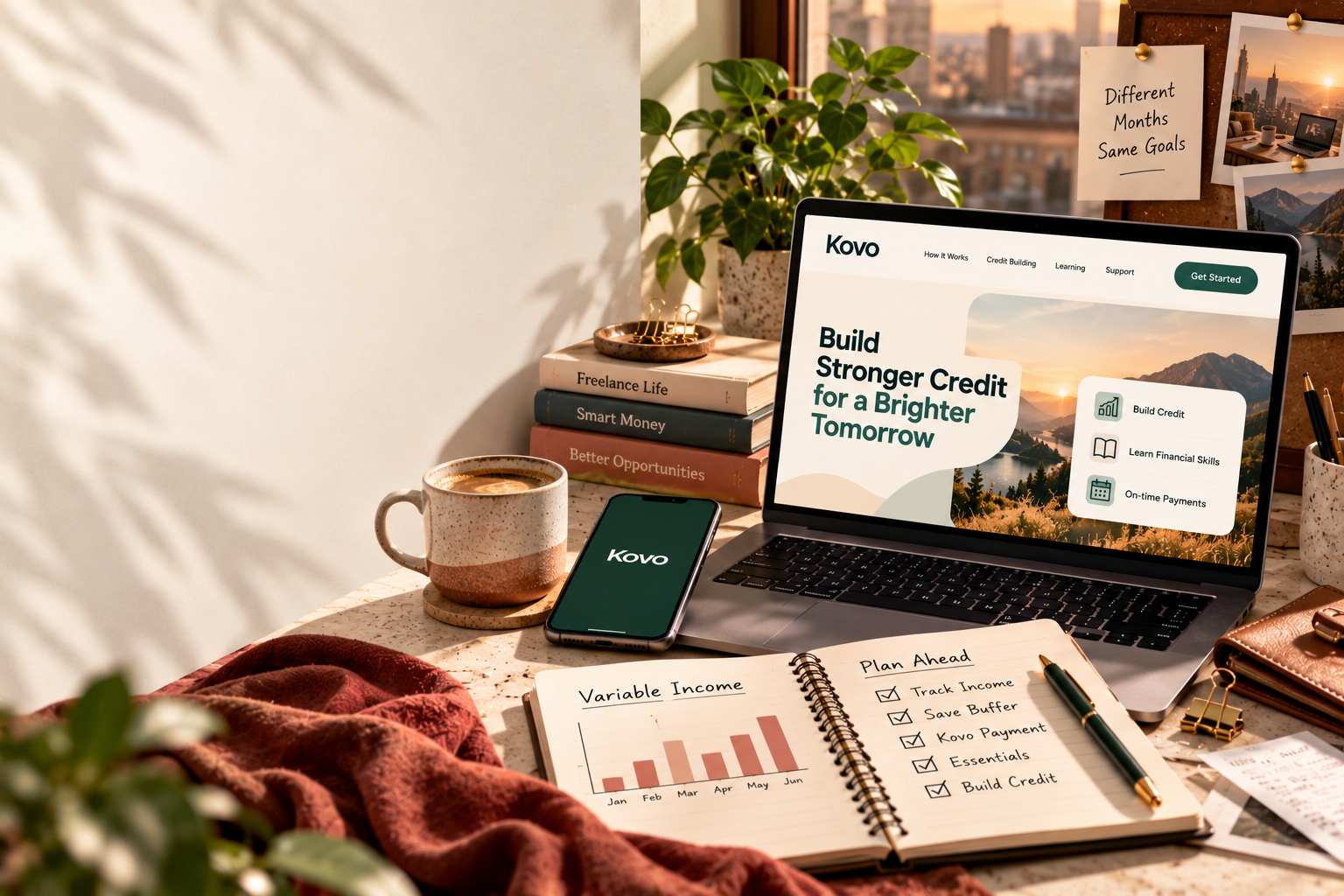
Some months you earn well. Some months a client pays late, orders slow down or a semester break empties your schedule. Then a credit-building plan arrives with one demand: the same payment, on the same date, every single month. For freelancers, gig workers, students and anyone paid unevenly, that mismatch is the real challenge. It is not about discipline, it is about timing. This guide looks at how a service like Kovo could fit into an unpredictable income, what to prepare before you sign up and how to protect yourself in a lean month. The ideas are simple, and none of them need fancy tools.
Why uneven income and fixed payments clash
Credit systems love routine. A lender sees an on-time payment, then another, then another, and slowly trusts you more. Your income, on the other hand, may arrive in waves. A fixed bill does not care about waves, so one slow month can turn into a missed payment even when your yearly earnings are fine. That is why the first step is not choosing a plan, but understanding your own cash flow. Look at the last six months of money coming in and write the lowest month beside the highest one. If you consider Kovo, that lowest month should be the one you test the payment against.
Build a floor before you build credit
A floor is the smallest amount of money you can count on in a normal month. Find it by looking at your three weakest months and using the average, then keep your fixed costs below it. Rent, food, transport and phone come first. Whatever remains is the space where a monthly credit payment can safely live. Treat this as Unit 1 of your planning: know your floor before you add any new bill. If the payment from Kovo would fit only in your best months, it is too heavy for now. Waiting a little and saving first is not a defeat. It is the move that keeps your record clean.
Create a small credit-builder bucket
Here is a trick that works well for uneven earners. Open a separate savings pocket, whether a second account or a labeled envelope, and call it the credit bucket. In good months, add a bit extra until it holds two or three payments. In bad months, the bill is paid from the bucket and your normal money stays untouched. This turns an unpredictable income into a predictable bill. Even a small buffer reduces stress dramatically. If you decide to join Kovo, build the bucket first or at least alongside it, so your first lean month does not become your first missed payment.
Choose a due date that matches your cash flow
If a service lets you pick or move the payment date, use that option wisely. Think about when your money usually lands. If clients pay near the start of the month, schedule the bill a few days after. If you are paid weekly, choose the day after your most reliable payday. Avoid dates that sit right before income arrives, because that gap is where most late payments hide. Always check whether the platform allows date changes and how they work. Read the current rules on Kovo and confirm them by message if they are unclear, because a date that works for your cash flow is worth more than a small discount.
Read the fine print with extra care
People with unstable income should read the small print twice. Ask what happens if you pay late, how many days pass before a late payment is reported, whether any fees apply and how cancellation works. Some reviewers mention that a payment more than thirty days late can be reported, which can hurt your score. Treat this as Unit 1 of your risk check: know the exact line between a small delay and real damage. Screenshot the terms on the day you sign. Terms and prices can change, and sources often disagree, so rely on the current page of Kovo and written replies from support, not on memory or hearsay.
Use a simple monthly rhythm
Make a rhythm and repeat it. On the first of the month, list what you expect to receive and what must be paid. Mark the credit payment date in your calendar with a reminder two days before. Move money to the bucket the moment income arrives, not at the end of the month when it has vanished. At the end of the month, spend ten minutes noting what worked. This tiny routine turns a stressful guess into a habit. Credit builders only help if the payment arrives on time, and a calm rhythm is the cheapest insurance you can get. When you set up Kovo, add these reminders on day one.
What to do if a month goes badly
Even with good planning, a bad month can happen. A client disappears, you fall ill or an emergency eats your savings. The worst move is silence. If you see trouble coming, act before the due date. Use your bucket first. If it is empty, check whether you can adjust the payment date or contact support, and ask what options exist. Written replies are your protection. Do not borrow at very high interest just to avoid a late mark, because that can create a bigger problem. Think about your essentials first, and check whether you can pause or cancel a plan if it does not fit. Reach out to Kovo early and explain calmly.
Plan for seasons
Many irregular incomes follow seasons. A tutor earns less during holidays, a seller earns more near festivals, a student works full time only in summer. Draw a simple twelve month line and mark your high and low months. Then place the credit payment so that every low month is covered by savings from the high ones. Treat this as Unit 1 of long term planning: let the calendar guide you instead of fighting it. If your low season is long, consider waiting until your cash is steadier before joining Kovo. A service meant to build trust should not push you into stress during the quiet months.
Habits that help beyond the plan
A monthly payment is only one part of the picture. Keep any card balance low compared with its limit, because heavy use can reduce a score. Avoid applying for many accounts in a short time. Pay every bill on time, including small ones, such as phone and utilities, since a forgotten bill can sometimes reach collections. Check your free credit reports regularly for mistakes and dispute errors. These habits cost almost nothing, yet they carry real weight. A credit builder like Kovo can add one piece to your history, but your day to day choices write the rest of the story.
Track progress without obsessing
New credit builders often check their score every day and feel crushed by small moves. Do not do that. Scores shift for many reasons, and a single month tells you very little. Choose one calm check per month, ideally on the same day, and write the number in a notebook. More important than the number is the report itself. After a few months, confirm that your payments appear and that the information is correct. If something looks wrong, contact support and keep records. When you use Kovo, remember that progress usually feels slow, and slow is normal. Steady lines on a page beat dramatic spikes.
Keep a simple paper trail
Irregular earners often juggle many payments, so organization matters. Create one folder, digital or paper, for everything about this plan. Save the sign up confirmation, a screenshot of the terms, each payment receipt and any message from support. Treat this as Unit 1 of your record keeping: if a dispute ever appears, your folder answers it in minutes. Add a monthly note about your credit report check as well. When you use Kovo, this habit costs nearly nothing and can save you hours of stress. Tidy records also help you notice patterns, such as which months were hardest and why.
Compare options built for tight budgets
If your income is uneven, compare more than one path. A secured credit card needs a deposit, which may be hard if cash is tight, but it can be flexible about when you pay. A credit builder loan from a credit union may return the money at the end, which can feel like saving. Being an authorized user on a trusted person’s card can add history without a new bill. Each option has costs and rules. Write the monthly cost, the deposit, the reporting coverage and the exit terms beside Kovo, then pick the one your lowest month can handle comfortably.
Celebrate small wins and stay patient
Credit building rewards patience more than cleverness. Do not wait for a dramatic score jump to feel proud. Each on time payment is a small win, and twelve of them in a row is a solid achievement. Share the plan with someone you trust, so you have encouragement during a tough month. Remember why you started: lower deposits, easier rentals, calmer money talks later. Be kind to yourself if you slip, and fix the cause instead of blaming yourself. If you keep your plan simple and your payments steady, Kovo is just one of several quiet tools helping you move toward a stronger file.
Three short examples
Consider a freelance designer whose clients pay in lumps. She keeps a credit bucket with three payments saved and schedules the bill after her usual invoice dates. Consider a delivery rider whose weeks vary. He pays from a weekly set aside and avoids dates before his strongest earning days. Consider a student with summer work who saves in summer and covers the quiet semester from that stash. All three build the same habit with different tools. These are imaginary examples, but the pattern is real: smart timing beats big income. Think about which example looks like you when you consider Kovo.
Questions to ask before you sign up
Can I afford this payment in my weakest month, not my average one? Do I have a buffer for at least two payments? Do I know the late rules and the cancellation steps? Which bureaus receive my payments? Have I compared at least two alternatives? Do I understand the total cost across the full term? Am I choosing this because it suits my plan or because I feel rushed? Write your answers down. If any answer makes you uneasy, pause. A clear yes to every question is a good sign, and you can then look at Kovo with confidence instead of worry.
A word of honesty
No plan removes the risk that income drops. Credit building is slow, results vary and nothing here is financial advice. Details about prices, plan length, features and availability differ between sources and can change, so verify everything on the official page. Kovo and similar services seem to serve people in specific countries, so check eligibility before you plan anything. If your money feels tight, free advice from a nonprofit credit counselor can be more valuable than any product. Use Kovo only if the numbers work in your lowest month, and never stretch your budget for the sake of a score.
Final thoughts
Uneven income does not close the door on good credit. It only asks for a little extra preparation: know your floor, build a bucket, choose a smart due date and read the fine print. Do those four things, and a fixed monthly payment becomes manageable, even in a quiet season. If the terms make sense, open Kovo, check the current details yourself and start only when your plan feels calm. Credit is built by showing up month after month. A little structure now means fewer surprises later, and the record you build will quietly work for you for years. Start small, stay steady, and keep going.