


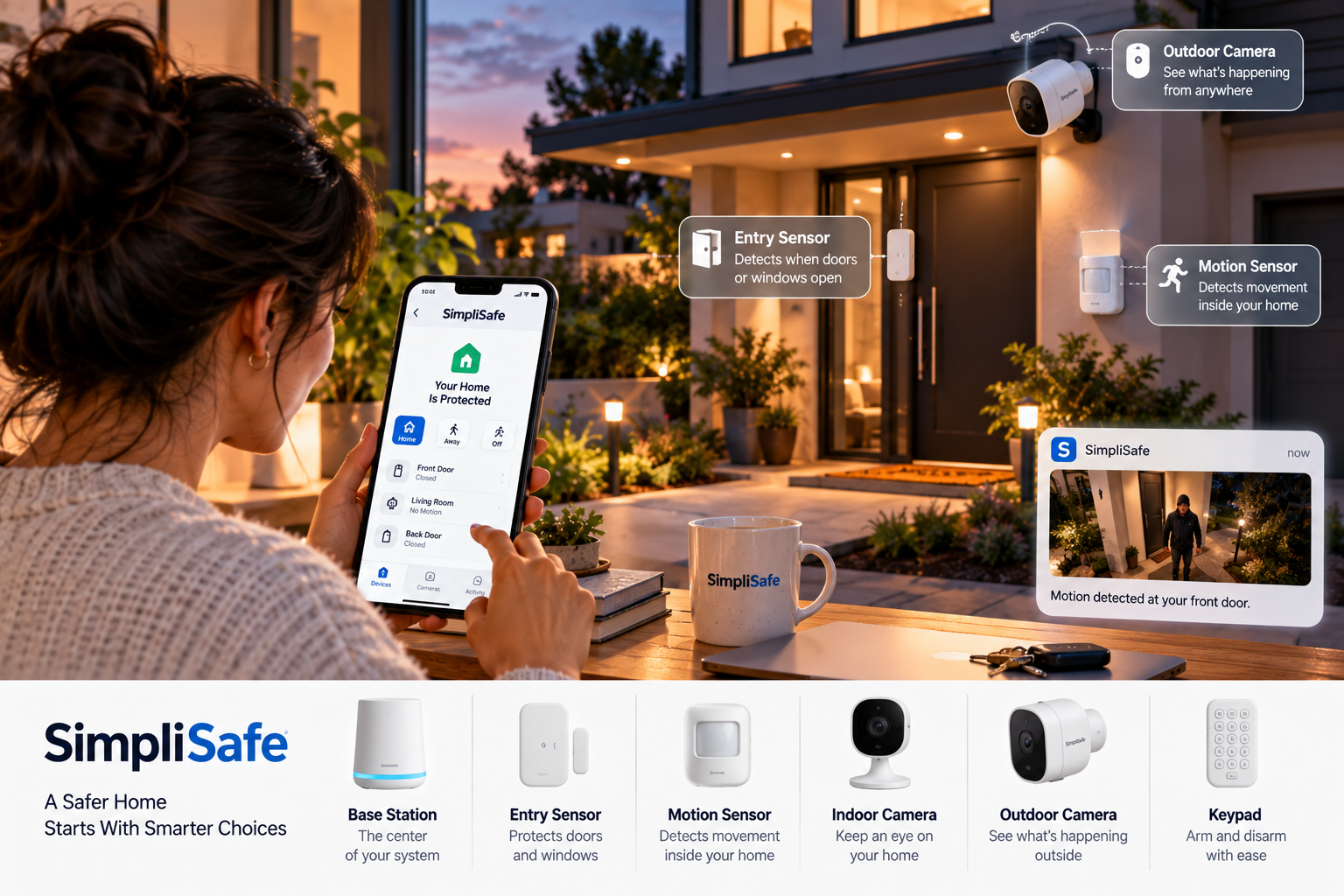
Think about your home at the moment you leave for work. You lock the door, check your pockets, and head out, but halfway through the journey, a familiar question appears: did you actually lock everything? That small moment explains why home security matters beyond alarms and cameras. It is about feeling confident when you are home, asleep, or somewhere else entirely. With SimpliSafe, homeowners can explore security systems designed around different spaces, routines, and protection needs. The smartest setup is not necessarily the biggest one; it is the one that makes sense for the way you live.
Start by Understanding What You Need to Protect
Before buying equipment, take a walk around your home and look at it from a practical perspective. Which doors are used most often? Are there ground-floor windows that are easy to overlook? Does your home have a long hallway, a separate entrance, or an outdoor area that deserves attention? These questions help you identify where protection could be useful. The customizable systems offered by SimpliSafe allow you to consider different combinations of cameras, entry sensors, motion sensors, and other devices. Starting with your actual needs makes it easier to avoid paying for equipment that adds little value to your particular home.
Why Entry Points Deserve Your Attention
A front door can be the most obvious place to begin, but it is rarely the only entrance worth considering. Back doors, side entrances, accessible windows, and doors connecting a garage to the home can all be important parts of a security plan. Entry sensors are designed to detect when a protected door or window opens, helping you know when an entry point has been disturbed. When exploring SimpliSafe, consider how many entry sensors you need and where they would be most useful. A thoughtful placement plan can be more valuable than simply adding more devices without a clear purpose.
Motion Sensors Add Another Layer of Awareness
Entry sensors focus on doors and windows, while motion sensors can detect movement within the areas where they are installed. This can be particularly useful in main passageways, living spaces, and other locations where movement may matter when nobody should be moving around. The right placement depends on your floor plan, household habits, and the system settings you choose. With SimpliSafe, you can explore systems that combine motion sensors with entry sensors, creating multiple layers of detection rather than relying on a single device. Check the installation guidance and settings to help reduce unnecessary alerts.
Cameras Help You See More of What Is Happening
An alarm can alert you to a potential issue, but sometimes you also want visual information. Cameras can help you check activity around entrances, monitor selected areas, and review footage when something needs a closer look. Outdoor cameras may be useful for observing approaches to the property, while indoor cameras can suit particular rooms or entry areas. SimpliSafe offers indoor and outdoor camera options, with available recording and monitoring features depending on the plan. Before choosing a camera, consider its field of view, placement, lighting conditions, and whether you genuinely need recorded footage or primarily want live viewing.
Security Should Fit Your Routine at Home
A good security system should work with everyday life instead of making it more complicated. During the day, someone might be moving between rooms, opening doors, or welcoming visitors. At night, the household may be asleep, and different areas may need to remain protected. Home and Away modes allow supported devices to behave differently depending on whether people are home or the property is unoccupied. With SimpliSafe, you can review these settings and determine which sensors should be active in each mode. Check the default behavior of individual devices and adjust settings to suit your household.
What Happens When You Leave for the Day?
Leaving home often involves several small tasks: checking the windows, turning off appliances, locking the doors, and making sure everything is in order. A security system can become part of that routine. Depending on your setup and available features, you may be able to arm the system through the mobile app, receive alerts, and check supported camera feeds remotely. SimpliSafe offers app-based controls for supported systems, allowing users to manage certain security functions away from home. Remember that remote access depends on the equipment, internet connection, and service features available to you, so check these requirements before purchasing.
Professional Monitoring: Support When You Cannot Respond Yourself
Receiving an alert is useful, but what happens if you are driving, sleeping, attending a meeting, or unable to check your phone? Professional monitoring provides an additional layer of support by having monitoring personnel respond to qualifying alarm events according to the selected plan and its procedures. Depending on the plan and the nature of the alert, emergency services may be contacted when appropriate. SimpliSafe offers different monitoring options, but not every plan includes the same services. Review the current terms, dispatch capabilities, and monthly costs carefully before deciding whether professional monitoring is right for your household.
Outdoor Protection Can Add Another Dimension
Home security does not have to begin at the front door. Outdoor areas, entrances, and approaches to a property can also deserve attention, particularly if you want to know about suspicious activity before someone reaches the building. Camera placement, lighting, visibility, and the areas you want to observe should all influence your decision. Selected monitoring plans from SimpliSafe include Active Guard Outdoor Protection, which combines supported outdoor cameras with live monitoring agents and AI-assisted detection. Availability depends on the qualifying equipment and plan, so examine the requirements before treating this feature as part of your proposed setup.
Remember That Home Safety Is More Than Break-In Detection
A security plan should consider more than unauthorized entry. Smoke, carbon monoxide, water leaks, and extreme temperatures can also create serious problems in a home. Depending on the devices installed, alerts for certain hazards can provide additional awareness when something goes wrong. SimpliSafe offers selected devices for smoke and carbon monoxide detection, water sensing, and temperature monitoring. These products can complement a wider safety plan, but they should not automatically be treated as substitutes for required primary alarms or other safety equipment. Check each device’s intended purpose, installation requirements, and monitoring limitations.
Privacy Matters as Much as Protection
Adding cameras around your home can provide useful information, but it also raises an important question: who can access the footage, and when? Before installing any camera, think about which spaces need monitoring and which should remain private. Avoid placing cameras in sensitive areas, secure your account, and review available privacy controls. SimpliSafe provides privacy-related information and, for eligible setups, a Video Verification option that allows monitoring agents to review footage associated with a specific alarm event. The feature has requirements and can be switched on or off in supported settings. Read the current privacy information before deciding how to configure your cameras.
Choose a System That Matches Your Space
A small apartment does not necessarily need the same equipment as a large house with several entrances and outdoor areas. A smaller property might need a base station, keypad, entry sensor, and motion sensor, while a larger property could benefit from additional sensors or cameras. The aim is to cover the areas that matter without creating unnecessary complexity. SimpliSafe offers preconfigured packages and a build-your-own option, giving you different ways to approach your setup. Compare the included equipment with your room layout and entry points instead of choosing a package based on its name alone.
Think About the Full Cost, Not Just the Equipment
The initial equipment price is only one part of the decision. Depending on the features you want, you may also need to budget for a recurring monitoring plan, camera recording, or other services. A lower initial price may be appealing, but it is worth understanding what you will be able to do without a subscription and which features require an ongoing payment. Before purchasing SimpliSafe, compare current hardware prices, subscription costs, included features, and cancellation terms. Prices and promotions can change, so use the current official checkout and plan details to calculate the cost that actually applies to you.
Installation Should Be Straightforward, but Placement Still Matters
A system that is difficult to install or configure can become frustrating before you even begin using it. Before buying, consider whether you prefer a straightforward setup, need additional installation support, or have areas that may require more planning. Wireless devices can provide flexibility, but sensor placement, signal strength, power requirements, and the structure of your home still matter. SimpliSafe provides setup guidance and different installation options for customers to review. Follow the instructions for each device, test your sensors after installation, and confirm that alerts reach the appropriate destination before relying on the system.
Test Your System Before You Need It
Buying security equipment is only the beginning. You also need to understand how it behaves in everyday situations. Test the entry sensors, check that motion sensors respond as expected, review the app notifications, and learn how to arm and disarm the system. If you subscribe to professional monitoring, follow the provider’s instructions for testing without accidentally triggering an emergency response. SimpliSafe offers device settings and support guidance to help users understand their systems. A short test routine after setup—and periodically afterward—can help reveal configuration issues before they become inconvenient.
Common Home Security Mistakes to Avoid
One common mistake is buying equipment before identifying the areas that need protection. Another is installing sensors but never checking whether they work correctly. Some homeowners overlook recurring subscription costs, while others enable camera features without thinking carefully about privacy. It is also easy to assume that every feature is included in every monitoring plan. Before finalizing your SimpliSafe setup, write down the entry points you want to protect, the alerts you need, your budget, and the features that matter most. Then compare those needs against the actual equipment and plan details.
A Simple Way to Plan Your Security Setup
Start by mapping your main entrances, accessible windows, common passageways, and any outdoor areas you want to monitor. Decide whether you need cameras, entry sensors, motion sensors, environmental sensors, or a combination of these. Next, consider whether app access is enough for your needs or whether professional monitoring would provide useful additional support. Use the available customization options from SimpliSafe to compare possible configurations, then check the total equipment and subscription costs. Finally, review privacy settings, installation instructions, and the limitations of each feature before placing your order.
Is SimpliSafe the Right Fit for Your Home?
The right security system depends on your property, your routine, your budget, and the level of support you want when an alert occurs. If you want a customizable setup with entry sensors, motion detection, camera options, app controls, and optional professional monitoring, SimpliSafe is worth exploring. However, you should compare the available equipment and current plans carefully. Check whether the features you want are included, whether your preferred devices are compatible, and whether the recurring costs suit your budget. The best decision is one based on your needs rather than the number of devices in a package.
A Word of Honesty
No security system can guarantee that a break-in or emergency will never happen. Cameras, sensors, and monitoring services can provide detection, alerts, and support, but their performance depends on installation, connectivity, settings, equipment, and plan terms. Features may also have specific eligibility requirements or limitations. When considering SimpliSafe, read the current product descriptions, monitoring terms, and privacy information instead of relying solely on promotional claims. A clear understanding of what the system can and cannot do is an important part of making a responsible decision.
Final Thoughts
Feeling secure at home often comes from knowing that you have thought through the details: which entrances need attention, what alerts you want to receive, how you will check activity, and what should happen if a serious alarm occurs. A carefully chosen setup can help bring those pieces together without making everyday life unnecessarily complicated. Explore SimpliSafe, compare its available systems and monitoring options, and choose equipment that fits your home rather than buying more than you need. The goal is simple: build a security routine you understand, can maintain, and feel comfortable using every day.