


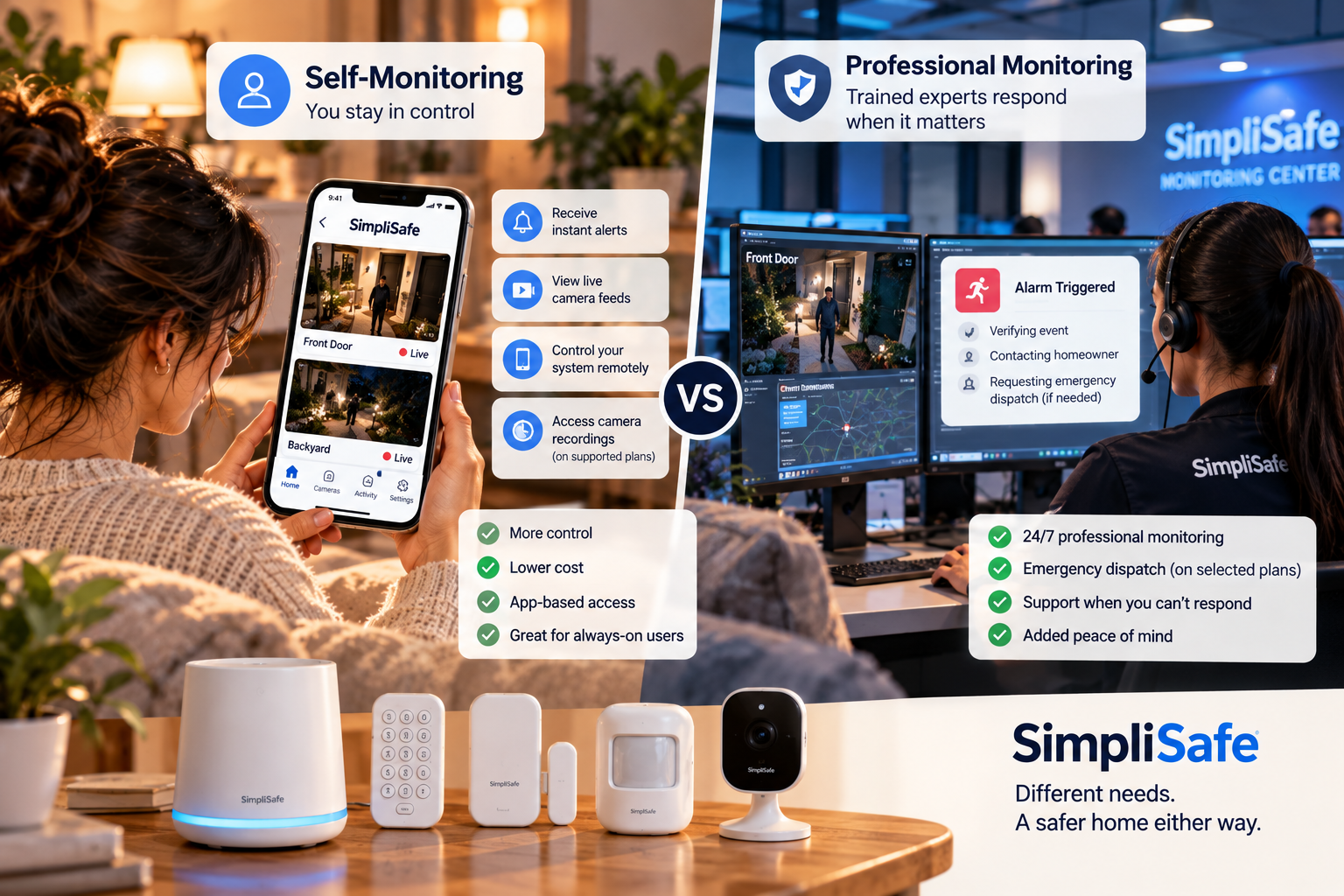
Home security involves more than installing cameras, motion detectors, and entry sensors. It also requires deciding who will respond when something unusual happens. When exploring SimpliSafe, one important decision is whether self-monitoring will meet your needs or whether professional monitoring would provide additional support. Both approaches can help you stay informed about activity around your property, but they differ in how alerts are handled, what services are included, and how much responsibility falls on you.
The best option depends on your daily routine, budget, property layout, and expectations. Someone who works from home and regularly checks their phone may have different priorities from someone who travels frequently or spends long hours away from home. Understanding the differences between SimpliSafe self-monitoring and professional monitoring can help you make a more informed decision without paying for features that do not match your needs.
What Is Self-Monitoring?
Self-monitoring means you take primary responsibility for keeping track of alerts from your home security system. Depending on your equipment and selected plan, you may receive mobile notifications, check camera feeds, review available recordings, and manage your system remotely. With SimpliSafe, the available self-monitoring features depend on the service option you choose, so it is important to distinguish basic system access from plans that include camera recordings.
Imagine receiving an alert while you are at work. You could open the relevant app, review the available information, and decide whether the situation requires further attention. If the alert appears to be caused by a family member entering the house, you might not need to do anything else. If something looks suspicious, however, you would need to determine the appropriate next step yourself. This responsibility is the defining feature of self-monitoring.
How Does Self-Monitoring Work?
A self-monitored system uses compatible devices to detect activity and notify you when an event occurs. Depending on your configuration, these devices might include entry sensors, motion sensors, or cameras. When an event triggers the system, SimpliSafe may provide the app access or notification features included in your selected service, allowing you to assess the situation.
Your response then depends on the information available and your circumstances. You might check a recording, contact another household member, or seek assistance if you believe there is a genuine emergency. The important point is that a notification is only the beginning of the process. You must be available to receive it, interpret what it means, and decide what to do next.
The Advantages of Self-Monitoring
One of the main benefits of self-monitoring is control. You can decide how to handle notifications and when to investigate activity, rather than relying on a monitoring service to manage qualifying alarm events. A self-monitoring option from SimpliSafe may suit people who prefer managing their own security and want access to compatible devices through an app.
Cost is another consideration. Self-monitoring options are generally less expensive than professional monitoring because they do not include the same level of monitoring service. If your main priority is receiving notifications and accessing selected camera features, paying for a more comprehensive service may not be necessary. However, you should compare the current plan details rather than assuming every self-monitoring option includes the same features.
Flexibility can also be useful. You may prefer to check an alert yourself, coordinate with family members, or decide how to respond based on the circumstances. With SimpliSafe, your exact level of control and access depends on the equipment and service plan you select, so review the available capabilities before deciding.
The Limitations of Self-Monitoring
The biggest drawback is that self-monitoring depends on your availability. You could be asleep, driving, attending a meeting, or somewhere with poor mobile connectivity when an alert arrives. Even if your SimpliSafe equipment detects an event correctly, you still need to notice the notification and respond appropriately.
Another limitation is the difference between receiving information and arranging an emergency response. A camera recording may help you understand what happened, but it does not automatically mean a monitoring agent will contact emergency services. If you choose self-monitoring, consider what you would do if you received an alarming notification while you were unable to check your phone. Having a clear response plan is just as important as having the equipment.
What Is Professional Monitoring?
Professional monitoring adds a monitoring service to your security setup. When a qualifying alarm event occurs, monitoring agents can follow the procedures associated with your plan and request emergency dispatch when appropriate. With SimpliSafe, residential professional monitoring plans vary in their features, so you should check which events, response procedures, and additional services are included.
This option can be useful if you cannot always respond to notifications yourself. Instead of making every incident depend entirely on your immediate availability, you have a service designed to respond to qualifying alarms according to its procedures. That additional support can be particularly relevant for households with busy schedules, frequent travellers, or people who want a more structured response process.
Professional monitoring does not mean every incident will automatically be prevented or resolved. Its purpose is to provide a defined response service when qualifying events occur. Understanding what your plan covers, how agents handle alarms, and what information they may need can help you set realistic expectations before subscribing to SimpliSafe.
The Advantages of Professional Monitoring
One important advantage is that professional monitoring adds another layer of support when a qualifying alarm is triggered. Depending on the service plan, monitoring agents may handle alarm events and request emergency dispatch when appropriate. Certain SimpliSafe plans include 24/7 emergency dispatch, while selected higher-tier options offer additional features such as Active Guard Outdoor Protection.
Professional monitoring can also be valuable when you are away from home for extended periods. For example, you might be travelling, working late, or unable to answer your phone immediately. A monitoring service provides a response process that does not depend entirely on you noticing a notification at that moment. This can be a meaningful difference for people who want support beyond app alerts.
Another advantage is the possibility of combining monitoring with other security features. Depending on the selected SimpliSafe plan, your setup may include access to camera recordings, live feeds, emergency response services, or additional outdoor protection capabilities. Comparing these features helps you determine whether a higher-tier plan offers meaningful value for your household.
What Should You Consider Before Paying for Professional Monitoring?
The main consideration is the recurring cost. Professional monitoring adds an ongoing expense, so you should decide whether the additional service matches your needs. When comparing SimpliSafe plans, look beyond the headline price and examine the features you will actually use, including emergency dispatch, camera recordings, remote access, and any additional protection services.
You should also review the service conditions. Check which alarm types are covered, whether particular devices are required, and whether certain capabilities are restricted to specific plan tiers. If you are considering advanced features, confirm the equipment and subscription requirements before purchasing. These details can affect both the total cost and the usefulness of your chosen security setup.
It is equally important to understand the response process. Professional monitoring is not a substitute for following emergency instructions or contacting emergency services when you face an immediate danger. Before selecting SimpliSafe, review how alarm events are handled and what responsibilities remain with you as the system owner.
Self-Monitoring vs. Professional Monitoring: The Key Differences
The most important difference is who is responsible for responding when an alert occurs. With self-monitoring, you generally receive the information and decide what to do. With professional monitoring, a service handles qualifying alarm events according to its procedures. The available SimpliSafe features depend on the plan, so compare the actual services rather than relying only on the names of the options.
Cost is another major distinction. Self-monitoring is generally the more economical approach, while professional monitoring costs more because it includes additional services. However, the cheapest option is not automatically the best value. If you need someone to respond to qualifying alarms when you are unavailable, the additional cost of a SimpliSafe professional monitoring plan may be justified by the support it provides.
The two approaches can also differ in how they fit your lifestyle. Someone who regularly checks notifications and has a clear plan for handling suspicious activity may be comfortable with self-monitoring. Someone who frequently travels or has long periods when they cannot check their phone may prefer professional monitoring. Your circumstances should guide the choice of SimpliSafe service.
Finally, remember that monitoring and equipment are separate considerations. Cameras can help you view activity, while entry sensors detect certain openings and motion sensors detect movement within their coverage areas. A monitoring service determines how qualifying alarm events are handled. Choosing SimpliSafe equipment and a service plan together allows you to consider how the different parts of your security arrangement work as a whole.
How to Decide Which Monitoring Option Fits Your Lifestyle
Consider Your Daily Routine
Start by thinking about how often you can check your phone and respond to notifications. If you work from home, have a relatively predictable schedule, and are comfortable managing alerts, self-monitoring may be a reasonable choice. If your work frequently takes you away from your phone, a professional service from SimpliSafe may offer a more suitable response arrangement.
Consider your sleeping hours and periods when you are least likely to notice an alert. Notifications can arrive at inconvenient times, and repeatedly relying on your own availability may not be practical for everyone. Think about whether you are willing to manage every alert yourself or would prefer the additional support provided by professional monitoring.
Evaluate Your Property and Household
Your property layout can influence the type of security arrangement you need. A home with several exterior doors, accessible windows, a garage, or multiple entry points may require a more considered combination of sensors and cameras. Before selecting a SimpliSafe package, identify the areas you want to monitor and determine which devices are appropriate for those locations.
Household routines matter as well. If family members frequently enter and leave at different times, you should make sure everyone understands how to operate the system. Knowing when to use Home or Away mode, how to disarm the alarm, and how to respond to an accidental trigger can reduce confusion. The available settings on your SimpliSafe equipment should be reviewed and configured to match your household’s normal activities.
Set a Realistic Budget
Your budget should include both the initial equipment purchase and any ongoing service fees. A lower upfront price does not necessarily mean a lower long-term cost if you later need additional devices or a different subscription. Compare the equipment and current plan options available through SimpliSafe before deciding how much you want to spend.
It is also helpful to separate essential features from optional extras. You may consider entry sensors and basic alerts essential, while advanced outdoor protection or extensive camera recording may depend on your specific concerns. Selecting a SimpliSafe plan around your actual requirements can help you avoid paying for capabilities that offer little practical value to you.
Think About Your Travel Habits
If you frequently leave your home unattended for holidays, work trips, or extended visits with family, consider how you would handle an alert while you are away. Self-monitoring may still work if you have reliable connectivity and can respond consistently, but it places more responsibility on you. Professional monitoring through a suitable SimpliSafe plan may be preferable if you want a service to handle qualifying alarm events during those periods.
Before travelling, test your equipment, review your notification settings, and make sure trusted household members understand how the system works. You should also check the system’s connectivity requirements and any limitations that could affect access while you are away. These preparations remain important regardless of which SimpliSafe monitoring option you choose.
Understanding Features Beyond Monitoring
Mobile App Access and Notifications
Mobile app access can make it easier to manage your security system without being physically present. Depending on the selected plan and compatible equipment, you may be able to arm or disarm the system, receive notifications, or view available camera footage. Before choosing SimpliSafe, confirm which remote features are included in the specific service option you are considering.
Remember that remote access depends on the system’s requirements and your ability to connect to it. A notification cannot help much if your phone is unavailable or the equipment cannot communicate as expected. Keep your devices configured correctly and learn how to check system status so that you understand what your SimpliSafe setup can and cannot do.
Cameras and Recording Features
Cameras can provide visual information that helps you understand activity around your property. Live feeds may allow you to check a location in real time, while recordings can help you review an event afterward if your equipment and plan support that feature. Some SimpliSafe service options include camera recordings, but availability and access vary by plan.
Think carefully about where cameras should be placed and what you want them to capture. A camera near an exterior entrance may provide useful context, while a poorly positioned device could leave important areas outside its view. You should also consider privacy when deciding where cameras belong and who should have access to their footage. A thoughtful SimpliSafe camera setup should balance visibility, usefulness, and respect for household privacy.
Additional Protection Features
Some households may benefit from features beyond basic intrusion detection. Depending on the package and compatible equipment, a security setup may include devices intended to detect smoke, carbon monoxide, water leaks, or temperature changes. These devices address different risks from entry sensors, so they should be selected according to the needs of the property. Check which options are available with SimpliSafe and whether any additional equipment or service requirements apply.
It is important not to assume that every device or emergency feature is included in every package. Read the specifications, check compatibility, and understand how each device operates. Security equipment is most useful when you know which risks it addresses and what action you should take when it activates. A well-planned SimpliSafe system should support your broader household safety plan rather than replace other necessary precautions.
Common Mistakes to Avoid When Choosing a Monitoring Plan
One common mistake is assuming that every security system automatically includes professional monitoring. Basic access, camera recording, and professional alarm response can be separate features. Before buying SimpliSafe, check the exact plan name, included services, and subscription requirements so you know what you are paying for.
Another mistake is choosing a plan based entirely on price. Saving money can be sensible, but the least expensive option may not meet your needs if you require features available only through a different service tier. Compare the current SimpliSafe options against your priorities, including whether you need camera recordings, professional response, or advanced protection features.
Some homeowners also install devices without checking their placement or testing their operation. A sensor positioned incorrectly may not provide the coverage you expect, and a notification setting that has not been configured properly could cause confusion. Take time to learn how your SimpliSafe equipment works, test it according to the manufacturer’s instructions, and make sure household members know how to use it.
Finally, avoid treating cameras as a complete replacement for other security measures. Cameras provide visual information, while entry sensors, motion sensors, and monitoring services serve different purposes. Strong locks, sensible routines, appropriate lighting, and well-maintained equipment can also contribute to a more considered approach. When planning your SimpliSafe setup, consider how the different components work together instead of relying on a single feature.
How to Get More Value From Your Home Security System
Begin by identifying your main concerns. You might want to know when someone opens an exterior door, check activity around your driveway, or receive support when a qualifying alarm occurs while you are away. Defining these priorities helps you select suitable devices and services instead of purchasing equipment without a clear purpose. Use the available SimpliSafe package and plan information to compare options against those priorities.
Next, make sure your system is configured for everyday use. Household members should understand the difference between Home and Away modes, know how to manage accidental alarms, and be familiar with the notification process. Review the settings available on your SimpliSafe equipment and adjust them where appropriate so they match your household’s routine.
Review your arrangement periodically as well. Moving to a new home, changing work hours, adding family members, or travelling more frequently may alter your security requirements. Reassess the devices you use and whether your monitoring option still makes sense. If you find that you consistently miss alerts, for example, you may want to reconsider whether self-monitoring remains suitable or whether a professional service from SimpliSafe would better match your circumstances.
Final Thoughts
Self-monitoring and professional monitoring serve different needs, and neither option is automatically the right choice for every household. Self-monitoring provides direct control and may help reduce recurring costs, but it requires you to notice alerts and decide how to respond. Professional monitoring adds a service that handles qualifying alarm events according to its procedures, which may be valuable when you cannot always respond yourself.
The best decision comes from evaluating your routine, property, budget, and expectations together. Consider which devices you need, which service features matter most, and how much responsibility you want to manage personally. Before subscribing, compare the current equipment and monitoring options offered by SimpliSafe and check the terms carefully, since plan features and prices can change.
Ultimately, a useful home security arrangement is one that you understand, can afford, and can operate consistently. Choosing between self-monitoring and professional monitoring is not simply a question of which option offers more features; it is about finding the level of support that fits your real-life needs. With a clear plan and a realistic understanding of the available services, you can make a more confident decision about your home’s security.