


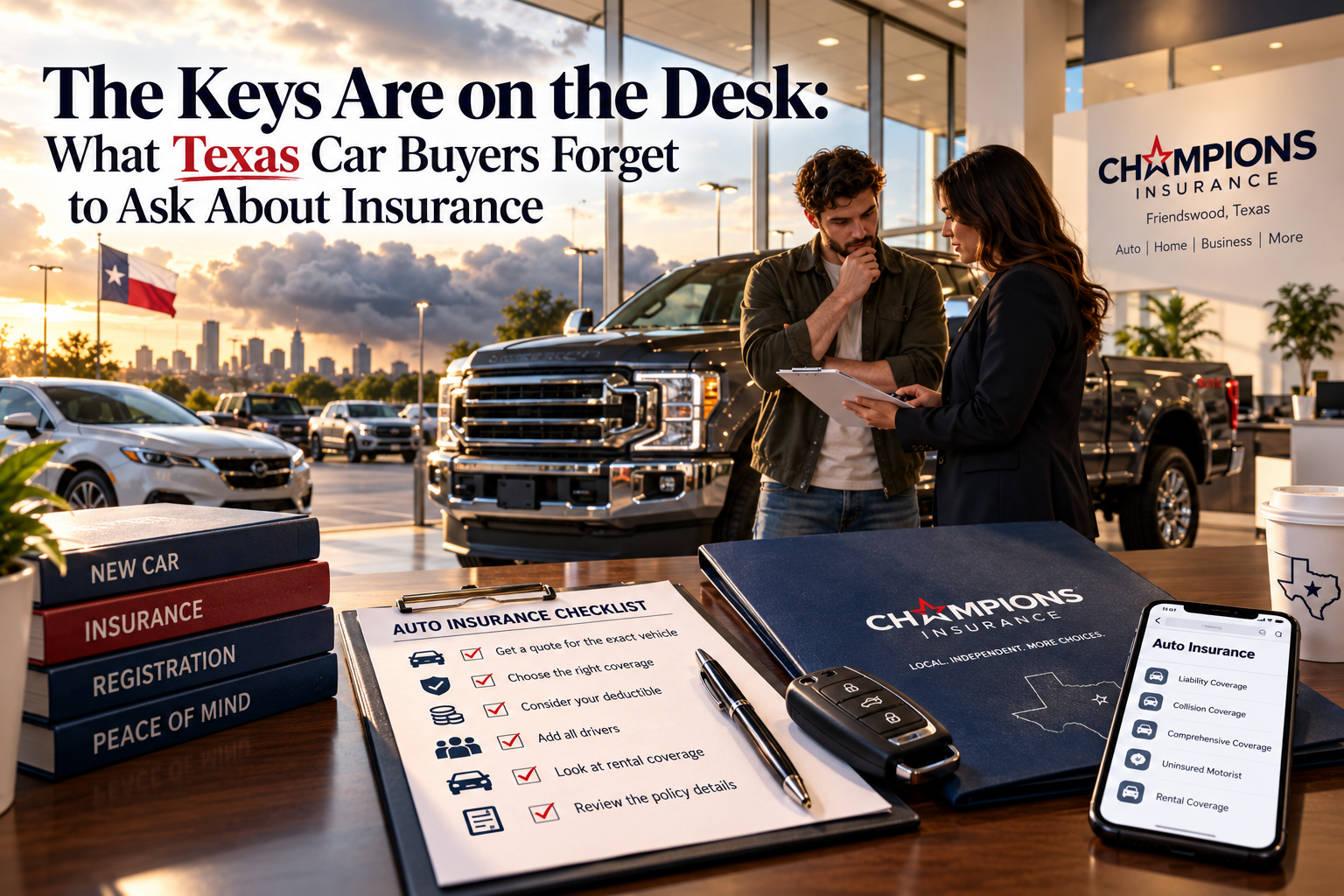
The salesperson slides the keys across the desk. The paperwork is almost done, the new car smells like fresh plastic and you are already imagining the first drive home. Then comes a quiet question that many buyers answer in a hurry: “Do you have insurance on this vehicle?” Suddenly the excitement meets a practical deadline. This guide is for anyone buying a car or truck in Texas, new or used, from a dealer or a private seller. We will walk through the insurance steps that are easy to forget, using the coverage topics described by Champions Insurance, an independent agency based in Friendswood.
Why insurance should come before the signature
Most people shop for the car first and the insurance last. That order feels natural, but it can cause problems. The exact vehicle you choose affects your premium, so a quote after the purchase may surprise you. Some models cost more to repair, some are stolen more often and some simply carry higher value. Checking the insurance side before you sign lets you compare two or three cars with the full cost in mind, not just the sticker price. It also removes the last minute scramble at the dealership. A short call to Champions Insurance before you finalize a deal can turn a rushed decision into an informed one.
Quote the exact vehicle, not a guess
When you ask for a quote, be specific. Give the make, model, year and trim, and the vehicle identification number if you already have it. Two versions of the same model can have different engines, safety features and repair costs, and those details can change the price. Also mention how you will use the vehicle: commuting, errands, family trips or work. Do not guess the numbers or leave out drivers, because inaccurate information can cause trouble later. Treat this as Unit 1 of your car buying checklist: no insurance decision without the exact vehicle details. Then compare the quote you receive from Champions Insurance with the other options on your list.
Financed or paid off? It changes the rules
How you pay for the car affects the coverage you need. The agency’s page explains that physical damage coverage, meaning collision and comprehensive, is optional if your vehicle is paid in full, though worth considering if you want complete protection. If you finance the car, a lender will often require this coverage to protect its interest, so ask the lender what is required before you buy. Even when it is not required, think about whether you could afford to replace the vehicle from your own savings. Ask Champions Insurance to show you the difference between a liability only policy and a policy that also protects your own car.
New car or used car?
A new car loses value quickly, but it is also expensive to repair and replace, which can affect the cost of physical damage coverage. A used car is cheaper to buy, yet it can still carry real value and real risk. The question is not only what you paid, but what it would cost to replace the vehicle if something happened next month. Check the car’s current market value, not just the price on the sale paperwork. If the value is low, you may decide that extra coverage is less important. If the value is high, protection matters more. Share these details openly with Champions Insurance so the options match your actual situation.
Plan the deductible alongside the down payment
Buyers often spend every spare dollar on the down payment and then have nothing left for emergencies. That is risky, because a deductible is the amount you pay yourself before insurance helps on a claim. A higher deductible may lower your premium, but it also means a bigger bill after an accident or storm. Think about how much cash you could find within a few days without borrowing. Write that number down before you choose your coverage. Treat this as Unit 1 of your budget plan: your emergency cash and your deductible must match. When you review quotes from Champions Insurance, ask how the price changes between two deductible choices, and pick one you can handle.
Do not skip rental coverage
New car owners rarely imagine the car being in the shop, but repairs after a covered loss can take time. The agency’s page describes rental coverage, also called loss of use, as an inexpensive option that can help pay for a temporary replacement vehicle or other transportation, with different daily limits available. If you rely on your vehicle for work, school or caring for family, that small add-on may matter more than you think. Consider how many days you could manage without a car and what a rental would cost for that long. Then ask Champions Insurance what daily limit would fit your routine and whether any conditions apply.
Add every driver who will really use the car
A common mistake is forgetting people who will drive the vehicle. A spouse, a college student coming home for holidays, a teenager with a new license or a family member who borrows the car for errands can all affect your policy. Being honest about who drives helps avoid problems at claim time. It can also change the price, so ask about it before you buy, not after. If someone moves out or a new driver joins your household, update the policy. Treat this as Unit 1 of your household check: list every regular driver on a piece of paper. Then review that list with Champions Insurance when you request your quote.
Get your proof of insurance before pickup day
Most dealerships and many states expect proof that the vehicle is insured before you drive away. That proof is often a digital or paper insurance card showing your policy details and the vehicle. Plan ahead so you are not waiting on the phone while the salesperson watches the clock. Ask your agent how long it takes to set up a new vehicle and what information they need from you. Confirm the effective date and time, so there is no gap in coverage. A quick conversation with Champions Insurance a few days before pickup can save you an awkward afternoon.
Trading in or selling your old vehicle
What happens to your old car matters too. If you trade it in, the dealer handles the transfer, but you should still confirm with your insurer when to remove the old vehicle from your policy. If you sell it privately, do not cancel coverage until the sale is complete and the paperwork is done, because a gap could leave you exposed. Keep a record of the date, the buyer and the documents you signed. If you keep both cars for a while, you may need coverage on both. Ask Champions Insurance how and when to update your policy so that nothing falls through the cracks during the switch.
Hail, storms and where you park
In Texas, weather can be dramatic. Hail, strong winds and heavy rain can damage a vehicle in minutes, and a new car deserves some thought about where it sleeps at night. A garage or covered parking can reduce exposure, though it does not remove risk. The agency’s page explains that comprehensive coverage, as part of physical damage protection, can help when a vehicle is damaged by something other than a collision, depending on the policy. Review what is covered and what is excluded for your situation. Treat this as Unit 1 of your weather plan, and ask Champions Insurance to explain how storm related damage would be handled.
The first thirty days after you buy
The first month is a good time to double check everything. Read your policy documents, even if slightly boring. Confirm that the vehicle information, the listed drivers and the coverages match what you asked for. Save the claim contact information in your phone, and note the policy number. If anything looks wrong, call right away, because small errors are easy to fix early and harder later. The agency’s website also offers a policy review service and a claim reporting page, which shows that these are normal steps to use. Put a reminder in your calendar and review your coverage with Champions Insurance when the first month ends.
Dealer or private seller: same insurance rules, different risks
Insurance works the same way whether you buy from a dealer or a neighbor, but the buying experience differs. A private sale may offer a lower price, though it often comes with fewer protections and less paperwork support. Have the vehicle inspected before you pay, check the title carefully and be sure the seller has the right to sell it. Do not drive it home uninsured because it feels like a quick, informal deal. Get coverage lined up first. If the car’s history or condition raises questions, ask Champions Insurance how that could affect coverage.
Count the total cost of owning the car
The price tag is only the beginning. Add insurance, fuel, maintenance, registration, parking and possible repairs. Many buyers choose a car they can afford to buy and then struggle to afford to keep. Write down a monthly budget that includes every item, with insurance based on a real quote. If the total feels tight, consider a cheaper model, a different trim or a used vehicle. Ask Champions Insurance for quotes on two or three vehicles you are considering, and let the numbers help you choose.
Questions to ask your agent before you buy
Which exact coverages do you recommend for this vehicle, and why? What are the limits and deductibles in each quote? Does my lender require collision and comprehensive? How much would rental coverage cost? How quickly can you add the new vehicle, and what proof can you provide? What happens to my old vehicle’s coverage? How do I report a claim, and what should I do first? What discounts might apply, and what must I do to keep them? If anything is vague, ask for it in writing. A good conversation with Champions Insurance should leave you clearer, not more confused.
Mistakes that catch buyers off guard
Some errors repeat every year. Buying first and asking about insurance later. Choosing a deductible that is bigger than your emergency cash. Forgetting to add a household driver. Cancelling the old policy too early. Assuming a financed car needs no extra coverage, or that a lender never asks for it. Skipping the review of policy documents. Ignoring the total cost of ownership. Cross these off before you sign anything. Whichever provider you choose, including Champions Insurance, a calm, prepared buyer almost always makes a better decision.
A word of honesty
This post is general information, not insurance, legal or financial advice. The coverage descriptions follow the agency’s public auto insurance page, and other points come from general knowledge, so they may not match your policy or your lender’s rules. Requirements, prices and practices change and differ from state to state. Champions Insurance says it is licensed in Texas, so it may not be able to help you elsewhere. Read your actual policy, check your loan documents and confirm important points with an agent or the Texas Department of Insurance. And if you decide that Champions Insurance is not the right fit for you, that is a perfectly sensible outcome.
Final thoughts
Buying a car is exciting, and excitement is exactly when small details slip through. Quote the exact vehicle, understand how your payment method affects coverage, plan your deductible, add every driver and set up proof of insurance before pickup day. Then review everything again in the first month. If you live in Texas and want a conversation with a local team, you can visit Champions Insurance, request a quote and compare it with other options. The best moment of a car purchase is not the signature. It is the drive home, knowing you are ready.