


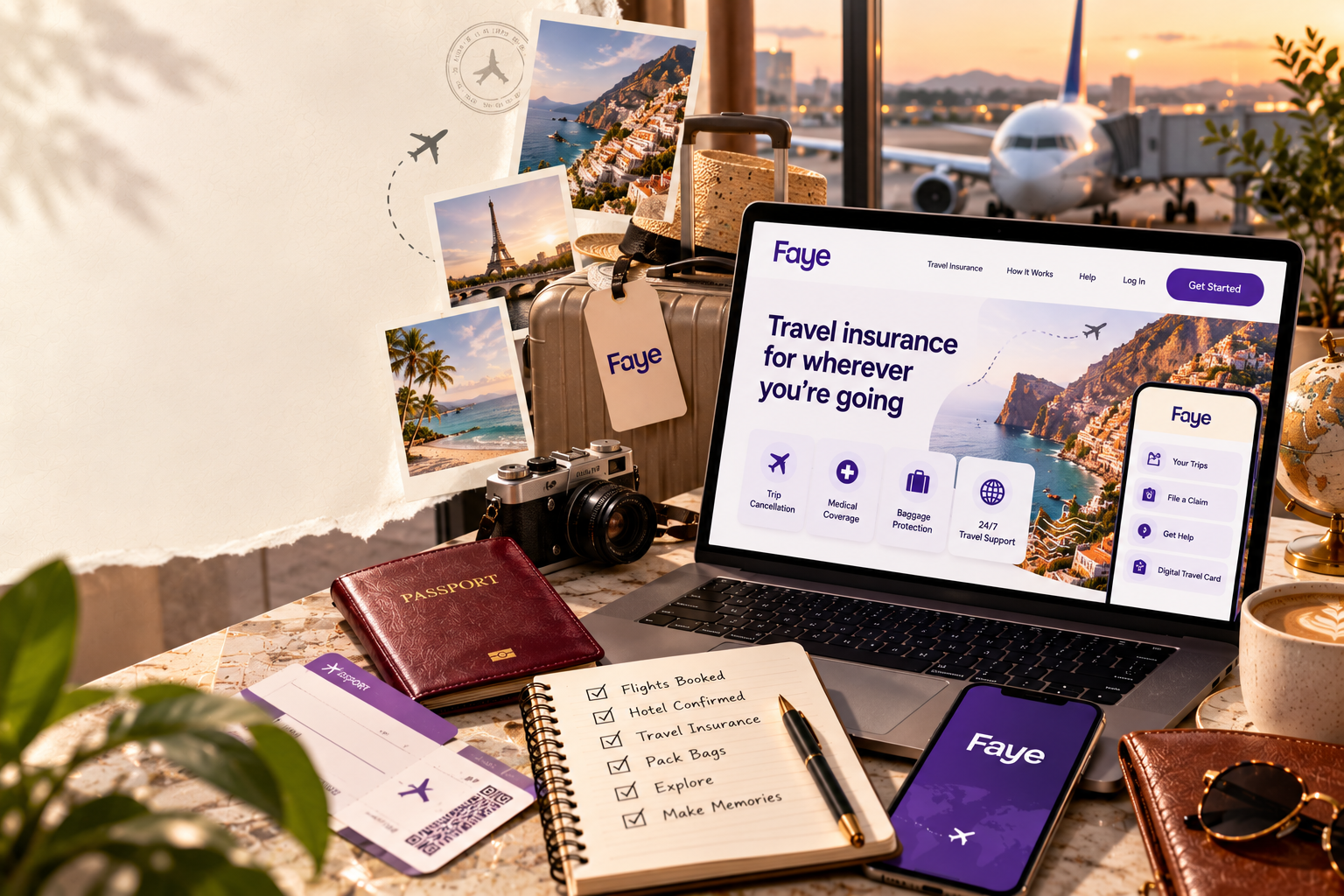
Picture the scene. The flights are paid, the hotel is confirmed and your bag sits half packed by the door. Then a fever hits two days before departure, or a connection falls apart in a foreign airport at midnight. Suddenly the dream trip has a real price tag attached to it. Most travelers never think about this moment until it arrives, and by then it is too late to buy cover. This guide looks at Faye, a modern travel insurance provider, in plain words. We will cover what it offers, who it may suit, what to read carefully and how to decide without pressure.
What travel insurance is actually for
Travel insurance is not a magic shield, and it does not make a trip risk free. It is a financial safety net for specific things that can go wrong, such as sudden illness abroad, a cancelled trip, delayed baggage or a missed connection. Think of it as paying a small amount now to avoid a very large bill later. Medical care overseas can be expensive, and prepaid bookings are often hard to recover. Before looking at any provider, including Faye, decide what you are most afraid of losing: your money, your health or your time. That answer shapes the kind of cover you need.
So, what is Faye in plain words?
Based on the reviews I read, it is a digital-first travel insurance company that describes its approach as whole-trip protection, meaning cover that follows you from booking until you return. Instead of many confusing tiers, reviewers describe one main plan that you adjust with optional add-ons. Treat this as Unit 1 of your research: understand the basic model before comparing prices or limits. The company works largely through an app and website, where you can get a quote, view your policy and request help. Details may change, so confirm everything on the official page of Faye before you decide.
What the cover usually includes
Most travel policies work in three groups, and reviewers describe Faye in similar terms. The first is health: emergency medical costs and, in many cases, emergency evacuation. The second is the trip itself: cancellation, interruption and delay protection. The third is your stuff: lost, stolen or delayed baggage and belongings. Reviewers also note that routine or preventive care is generally not covered, which is normal for travel insurance. Limits, deductibles and conditions vary, so do not rely on a summary. Open the policy documents for Faye, find the actual limits for your trip and read what each section really says.
The app and the fast payout idea
One feature that gets attention is the app. Reviewers describe a system where you can manage your policy, chat with support and file requests on your phone. Some also mention a digital travel card that can receive certain payouts, which you can add to your phone wallet and use quickly. That sounds convenient, because waiting weeks for reimbursement while abroad can be stressful. Still, convenience is not the same as coverage. A smooth app is helpful only when the policy pays for your situation. Ask Faye which claims can be paid this way, how fast it usually happens and what documents you must provide.
Add-ons: build cover that fits your trip
Many people like tailored cover because trips differ. A beach week with a hotel booking is not the same as a month of hiking or a trip with a pet. Reviewers mention optional add-ons, and some highlight unusual ones, such as help with a pet’s veterinary costs. Others discuss options like cancel for any reason, which is usually a pricier upgrade with its own rules. List the risks that matter to you and add only what fits. Check each add-on on the page of Faye, because conditions, percentages and deadlines can differ from one option to another.
Pre-existing conditions: timing matters
This is one of the most important topics in travel insurance. Reviewers say Faye may offer cover for trip cancellation or interruption linked to a pre-existing medical condition, but only if you buy within a set time after your first trip payment and you are medically able to travel at purchase. One review mentions fourteen days, though you must verify the current rule. The lesson is simple: buy early. Waiting until the week before departure can remove options. When you get a quote from Faye, read the exact definition of a pre-existing condition and ask support if you are unsure about your own history.
Buy before the trip starts
Another timing rule matters just as much. Reviewers note that you cannot buy cover after your trip has already begun. That means a policy is something you arrange before you leave, not something you fix at the airport or after a problem appears. A good habit is to buy shortly after you pay for your first major booking, such as flights or a hotel deposit. This can unlock better options and protect those early payments. Then open Faye, enter your dates and compare the quote against what you have already paid.
Who it may suit
Based on reviews, this kind of provider tends to appeal to travelers who like digital tools and flexible cover. Families, frequent travelers, remote workers and people with adventurous plans are often mentioned. It may also suit someone who dislikes phone queues and long forms. If you prefer to tailor each trip rather than pay for a bundled package, the add-on style can feel friendly. Think about your habits too. If you enjoy managing things on your phone, the app may be a plus. Before choosing Faye, picture your next trip honestly and ask which risks truly worry you.
Who should think twice
A few cautions deserve space. Some reviews say the cover is available only to residents of certain places, such as the United States, and not in every country. If you live elsewhere, check eligibility before you plan anything. Cover may also not apply to every destination or activity. Reviewers note that routine care is not included. And if you already have strong travel benefits on a credit card, you may not need to double up. Treat this as Unit 1 of your reality check: read the exclusions first. Then see whether Faye still makes sense for your trip, your home country and your budget.
Credit card benefits versus a standalone policy
Many credit cards offer trip delay, baggage and rental car protection when you pay with them. These benefits can be useful, but they often have limits, conditions and gaps, especially for medical care abroad. A standalone policy can fill those gaps, or cover you if you have no such card. The honest approach is to compare in writing. Make two columns: what my card covers, what the policy covers. Where the card is weak, a policy from Faye may add value. Where both overlap heavily, you may be paying for the same protection twice.
Read the policy like a detective
A summary page is a brochure. The policy document is the contract. Look for definitions, exclusions, deductibles, claim deadlines and what proof you need. Check how the policy defines things like illness, delay and covered reasons, because a word can change the outcome. Look for activity limits if you plan sports or adventure. Take screenshots of the terms on the day you buy and save the confirmation email. Treat this as Unit 1 of your claim protection. If something is unclear, ask Faye in writing and keep the answer. A thirty minute read before your trip can save you weeks of frustration after it.
How pricing works
Reviewers say prices are not flat. They usually depend on trip length, trip cost, traveler age, destination and the add-ons you choose. So a quote for a short domestic style trip can look very different from one for a long adventure abroad. Do not judge a provider by the cheapest headline number. Compare like with like: same dates, same trip cost, same medical limit, similar add-ons. Get at least two or three quotes and write them side by side. When you check Faye, remember that a lower price with weaker cover is not a bargain.
A simple pre-trip checklist
A few small actions make a big difference. Save the policy number and the support contact in your phone and on paper. Keep digital copies of your passport, bookings and the policy. Note the emergency steps: who to call and what to do first. Pack any needed medicine in original packaging with a doctor’s note, if relevant. Tell a family member where your documents are stored. This habit takes ten minutes and gives you calm. Add a short note about Faye to your travel folder so you can find the details quickly during a stressful moment.
If something goes wrong
Stay calm and act in order. Make sure you are safe and get medical help first if needed. Then contact your insurer early, because many policies expect quick notice and may require approval for certain costs. Keep every receipt, report and message. If your baggage is lost, get a written report from the airline. If something is stolen, file a police report where possible. Be honest and consistent in your claim. If you use Faye, follow the steps in your policy and use the app or support line as described. Good records make approval faster and disputes rarer.
Common mistakes to avoid
Many problems come from small oversights. People buy too late and lose options. They assume everything is covered without reading exclusions. They forget to check eligibility based on their residence. They buy cover that duplicates their credit card, or skip it when they truly needed it. Some ignore claim deadlines or fail to keep receipts. Treat this as Unit 1 of your mistake list, and cross each item off before paying. A few minutes of attention before you click the buy button on Faye beats a long email chain after a bad day abroad.
Questions to ask before you buy
Am I eligible, based on where I live and where I am going? What are the medical and evacuation limits for my trip? What happens with a pre-existing condition, and what is the deadline? Which add-ons do I truly need? Is my activity covered? How do I file a claim, and how long does it take? What is the deductible? Does my credit card already cover some of this? Write the answers down and keep them with your documents. If any answer is unclear, ask the provider before you pay, and use the official contact details listed by Faye.
A word of honesty
This is not insurance or financial advice, and I cannot know your health, your trip or your country. The details in this post come from reviews and public summaries, which sometimes disagree about founding dates, limits, prices and eligibility. So treat every number and rule as something to verify on the official page and in the policy itself. Insurance is only useful when it matches your situation. If you have a medical condition or a complicated trip, a licensed agent or the insurer can answer questions directly. And if you decide that Faye is not right for you, that is a perfectly sensible result of careful research.